


Experimental and Archaeological Sciences Lab (EASL)

EASL is a research lab for the study of past cultures and materials through experimentation, scientific analysis and STEAM (science, technology, engineering, arts, and mathematics) education.
All students, affiliates of the Cotsen Institute, and volunteers are welcome to use the resources available in EASL. To receive more information about the lab, reserve equipment, schedule a research consultation, or enquire about volunteer opportunities, please contact us.
Contact:
Director: Dr. Vanessa Muros
Lab: Fowler A149
Phone: (310) 825-7411
Email: easl@ioa.ucla.edu @easl_ucla
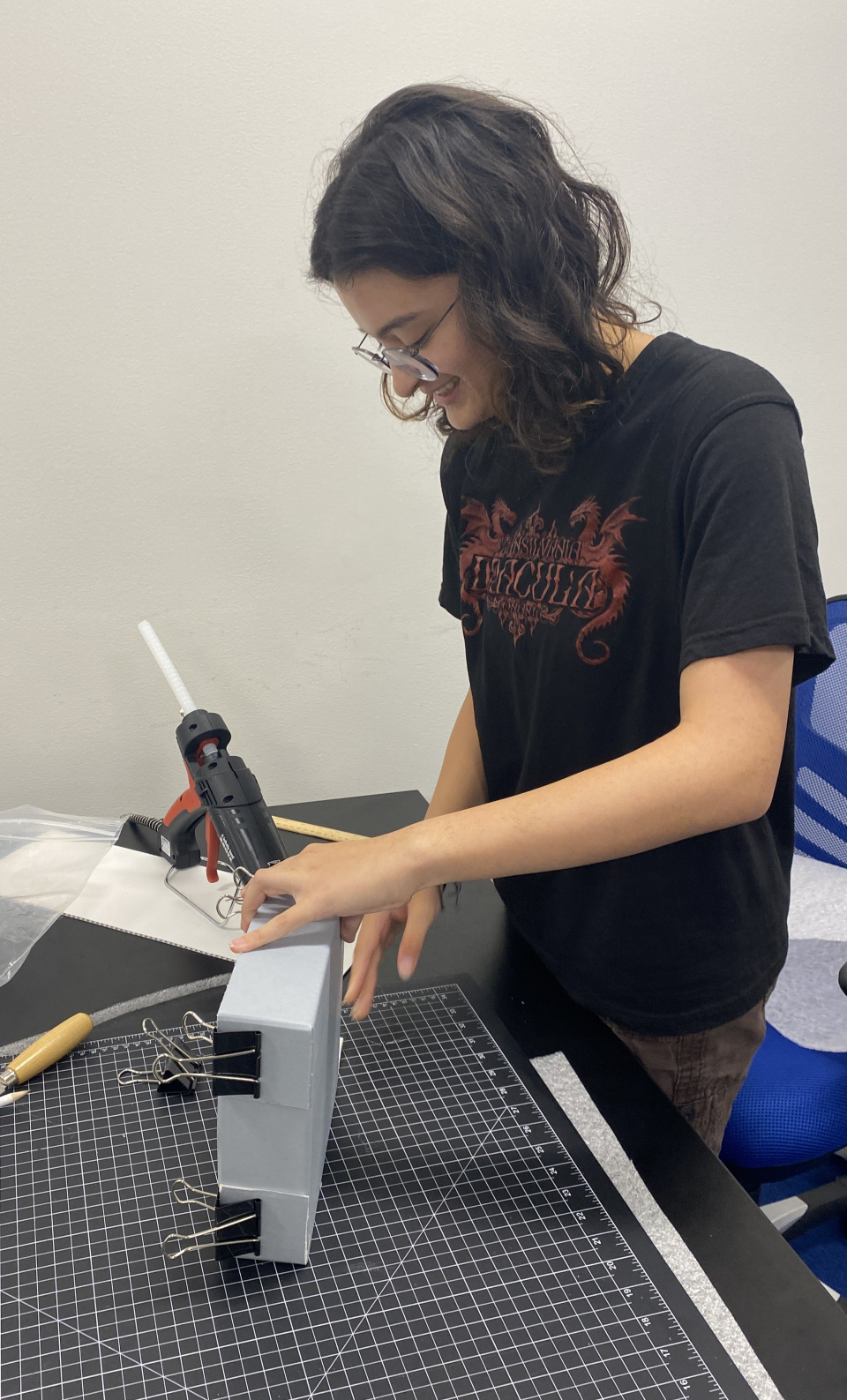
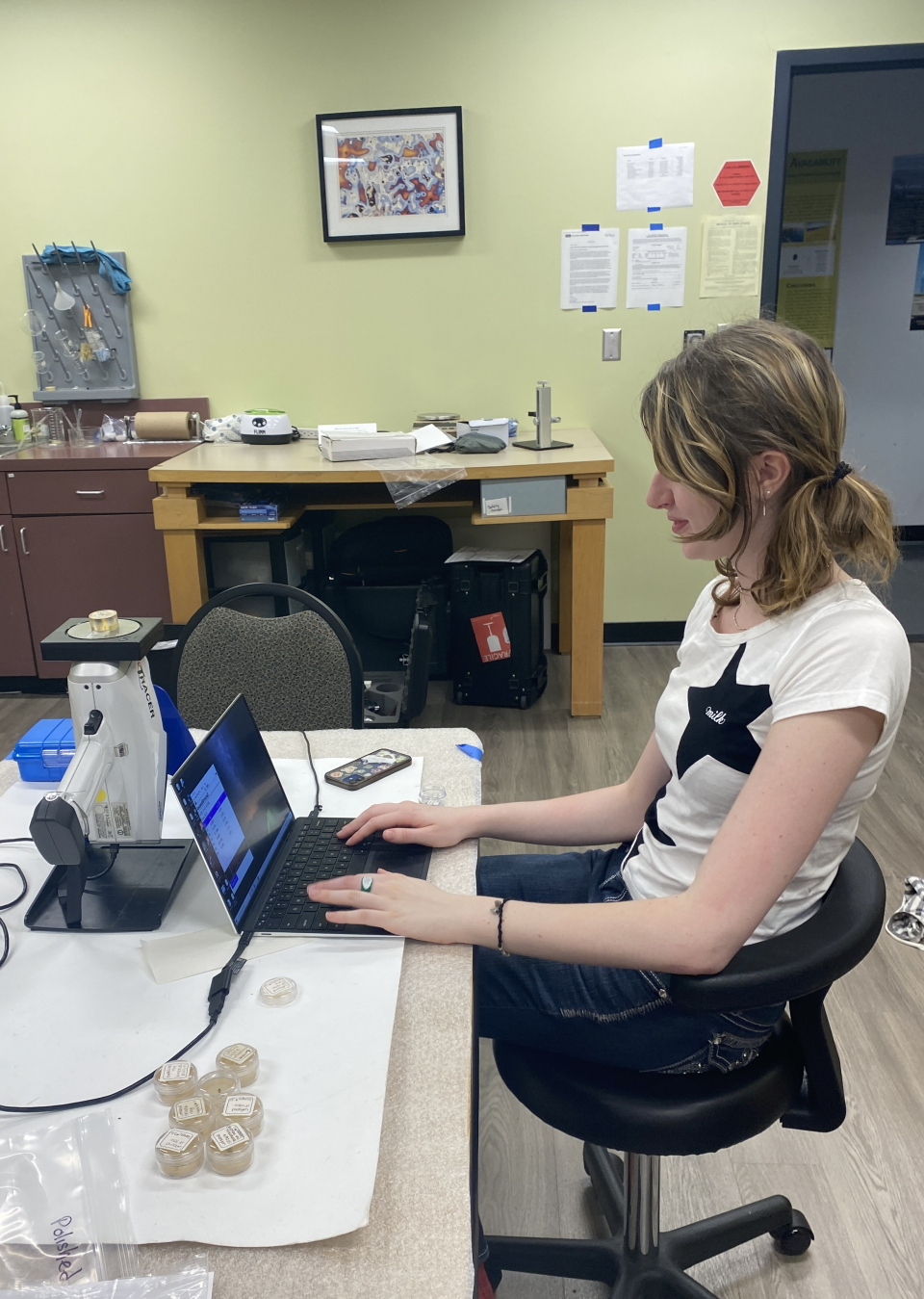
The Experimental and Archaeological Sciences Laboratory (EASL) is a collaborative research space dedicated to the study of ancient materials and technology through replication experiments and scientific analysis. The lab assists students, faculty and Cotsen affiliates with their archaeological research projects, as well as offers resources for laboratory-based courses. The work conducted plays an integral role in fulfilling the Cotsen Institute of Archaeology's mission to create, disseminate and conserve archaeological knowledge and heritage.
Equipment
EASL currently houses equipment for the examination and analysis of archaeological materials, as well as for the replication of archaeological artifacts and technological activities . This includes:
- several portable X-ray fluorescence spectrometers for material analysis
- a selection of microscopes, including stereo-microscopes, reflected, transmitted and cross-polarized light microscopes
- sample preparation equipment for grinding and polishing of petrographic thin-sections and mounted samples
- a traditional kick-wheel and a modern electric potter’s wheel for experimental pottery making
- a small electric kiln for experimental production of pyrotechnological materials like ceramics and faience
You can find a list of the available equipment here.
Current Projects
Waystation Initiative-Preservation and Materials Analysis
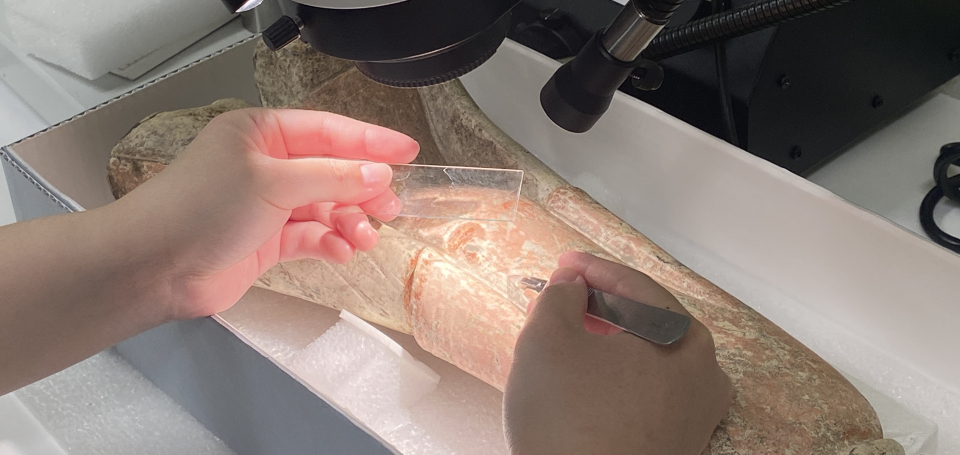
Since 2023 the majority of the work at the EASL has focused on the preservation and material analysis of cultural heritage items that are part of the Waystation Initiative. This work involves caring for the collection while temporarily stewarded at the Cotsen Institute and overseeing analytical research. Activities include artifact photography, condition reporting, creating archival storage trays, cataloguing, and technical studies to idenitfy materials and determine provenance and authenticity. The lab is also a part of the graduate certificate in Cultural Heritage Research, Stewardship, and Restitution Program supporting student research and offering a course in the winter quarter on provenance research and materials analysis.
Pigment Reference Collection
The lab is in the process of creating a pigment reference collection to use as comparative material for technical studies. Samples of various pigments are being prepared as slides for polarized light microscopy and as tiles for multiband imaging. The information collected from the pigments, such as morphology, optical properties, and luminescence will become part of a newly created reference material database.
Composition and Provenance of Ancient Glass from the Eastern Mediterranean
This project builds on earlier research on the composition and provenance of Late Bronze Age glass in the region to include glass from later periods. Techniques such as pXRF, SEM-EDS, EPMA, XRD, and LA-ICPMS are used to identify the composition of glasses and source the raw materials. The research provides information of the types of glass produced in different time periods, where they were made, and how they circulated across the eastern Mediterranean. The focus of the current studies are on glass from sites on the Greek mainland.
Past Projects
Making Ancient Egyptian Faience
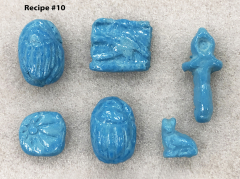
This project was conducted to reproduce ancient Egyptian faience, a glazed siliceous ceramic material. The experiments looked at different faience recipes,forming methods,glazing techniques, and firing conditions to understand how this material was made.
Identification of Neolithic Pigments from Masis Blur
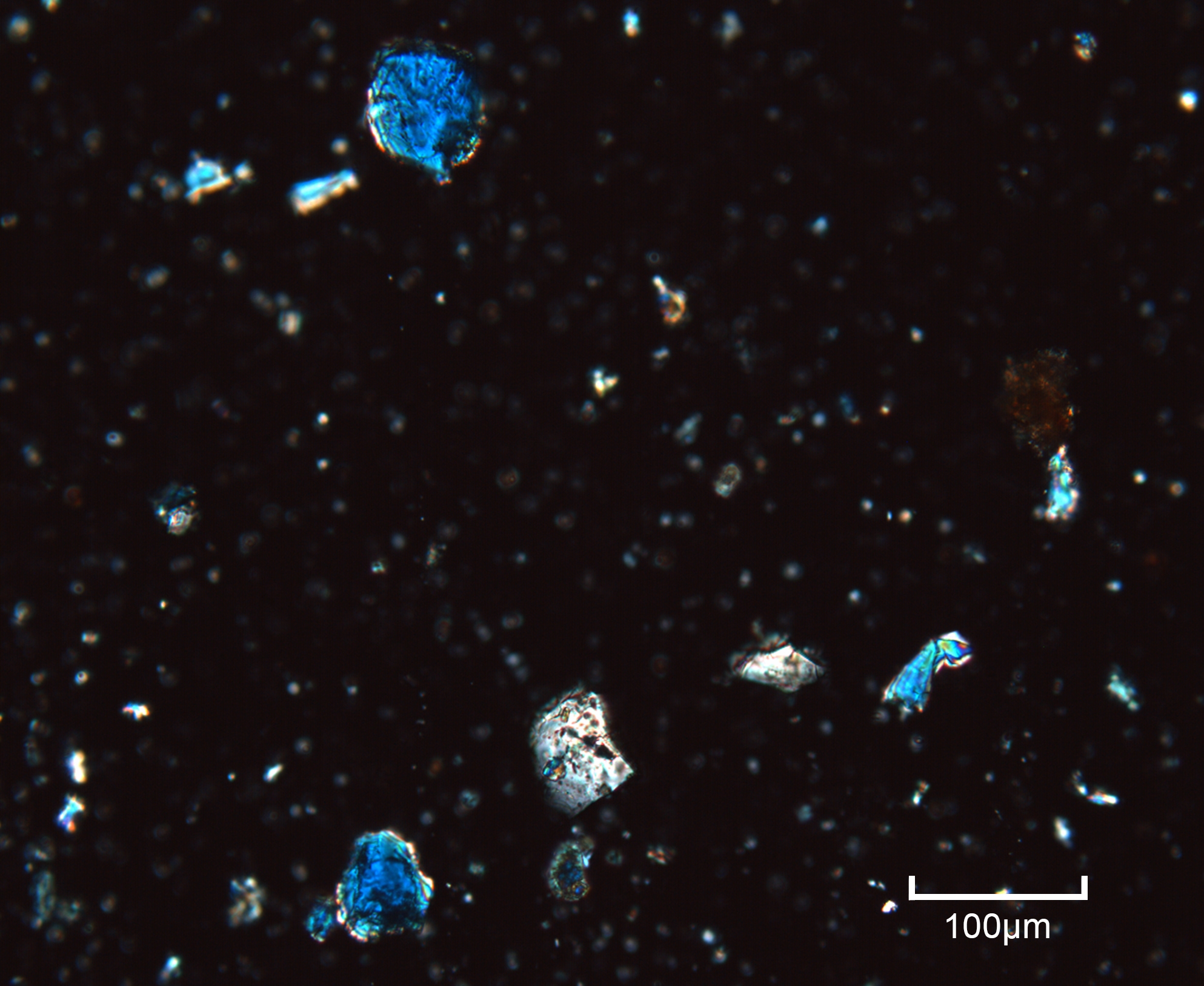
This project focused on identifying raw pigments excavated from the Neolithic settlement of Masis Blur (7000–6400 cal. BP) in modern Armenia using techniques such as polarized light microscopy and pXRF. Once identified, the work shifted to determine how these pigments, and the spaces that they were found in, were used, and where the materials came from to provide information on craft specialization and long distance trade activities at Masis Blur. This project was a collaboration with Dr. Kristine Martirosyan-Olshansky, Director of the Armenian Lab at the Cotsen Institute and co-director of the Masis Blur Archaeological Project.
Student Research
Multiband Imaging: An Analysis of Archaeological Artifacts
Giada Leggero ('27, Anthropology)
Archaeology as a discipline is commonly thought to be destructive in nature, however, with advancements being made in the field, non-destructive/invasive techniques have been given more attention. Multiband imaging techniques are growing in popularity which allows researchers to analyze artifacts without damaging any materials. This research focuses on how using False Color Infrared (FCIR), UV Induced Visible Luminescence (UVL), Visual Induced Luminescence (VIL), and Infrared Reflectance (IRR) imaging helps to identify pigments, areas of decoration, or repairs that cannot be seen in visible light. By comparing how different materials appear under differing imaging conditions, I aim to create workflows for imaging that can be used to differentiate and classify pigment types as well as reveal information on provenance. This project also attempts to evaluate the limitations of the technique when applied on artifacts that are deteriorated or have undergone conservation treatment. Ultimately, this project will demonstrate how the application of multiband imaging, as a non-destructive archaeological technique, can reveal information that contributes to an overall understanding about ancient materials, technology, and provenance without compromising the physical properties of the artifact or limiting its ability to be studied in the future.
Reasearch presented at UCLA's 2026 Undergraduate Research & Creativity Showcase
Last Dance: A Technical Study of Two Polychrome Tomb Figures
Feier Li ('25, Chemistry & Classical Civilizations), Dani Dsouza ('23, Classical Civilizations), Moupi Mukhopadhyay ('24, Conservation of Material Culture)
A technical study was conducted of two polychrome ceramic tomb figures of dancers dating to the Han dynasty (206 BCE-8 CE). These figures were temporarily stewarded at the Cotsen Institute as part of the Waystation Initiative and were returned to China in June. The purpose of the study was to identify the pigments used and how they were applied. To answer these questions a combination of analytical techniques, such as pXRF spectroscopy, polarized light microscopy, multiband imaging, and hyperspectral imaging, with art historical comparisons to related Han dynasty objects were used.
Research presented in Fall 2025 as part of the Cotsen Institute's "Wednesday Talks" series
Tracing the Origins of a Han Dynasty Artifact: Multidisciplinary Analysis of a Rare Bronze Qilin Figurine
Chloe Gupta ('25, Anthropology & Classical Civilizations)
The UCLA Waystation Initiative houses a collection of archaeological artifacts, including a bronze qilin figurine presumably from third-century CE China. In Chinese mythology, a qilin is a unicorn-like creature that symbolizes good fortune. While thermoluminescence dating places this object in the Han Dynasty, and a previous owner claimed it was discovered along the Silk Road, prior provenance and material analyses have not definitively resolved questions of its authenticity and origin due to its extensive restoration and unique style.
To address these uncertainties, a multi-faceted analytical approach was implemented to determine whether the figurine’s materials and construction match known Han Dynasty manufacturing practices or indicate modern alterations. Integrated analysis of the corrosion, pigments, and repairs resolved ambiguities regarding the artifact’s chronological and geographic context. An investigation of cultural heritage laws and provenance records, and consultations with experts yielded a more thorough comprehension of the qilin’s origin and historical framework.
The examination thus far reveals that the figurine is composed of leaded bronze and contains modern pigments, suggesting it is a pastiche piece incorporating authentic ancient materials alongside modern restorations. This multidisciplinary approach to provenance research will serve as a model for evaluating other puzzling artifacts of uncertain origin, while strengthening existing standards in archaeology, conservation, and cultural heritage fields.
Research presented at UCLA's 2025 Undergraduate Research & Creativity Showcase and the 10th Cotsen Institute of Archaeology Graduate Student Conference