

Assistant Professor Kelly Nguyen Guides Students into the Afterlife of Classics
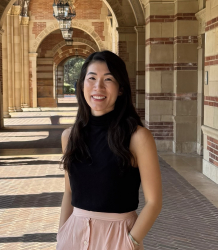
The afterlife of the classics is not an ordinary topic of discussion unless you are a student of Kelly Nguyen, Assistant Professor of Classics and a core faculty member of the Cotsen Institute of Archaeology (CIoA) at UCLA.
Nguyen, who was trained in ancient Greco-Roman studies as well as in archaeology, defines the afterlife of the classics as how materials from Greek and Roman antiquity, from texts and ideas to art and artifacts, are reinterpreted, adapted and reused in later cultures.
She explains that there’s been a lot of work that looked at how the classics have been used by different empires in the West, from the French to the British, as well as fascist Italy and Nazi Germany, to authorize their power by declaring that “this antiquity, the Greco-Roman one, is the foundation of the so-called ‘Western civilization,’ which became the rubric for ‘civilization’ writ large.”
“Each of these Western empires claimed that they were the true heir to this antiquity and thus to ‘civilization’ itself, which supposedly gave them the right to then colonize the rest of the world” she continued. She pointed out that whereas there has been a lot of research looking at the colonizers, she was curious about the other angle: from those who were colonized and forced to learn this tradition from the West, which was brought in as “this is going to save you and bring you into modernity.”
In Asia, she continued, there are different “classical” traditions that the West acknowledged but perceived as something that kept the culture stagnant and unable to continue to progress, in contrast to what the Greco-Roman classical tradition was thought to offer. She was interested in looking at the case of Vietnam because it had to reckon with classical traditions from both the “East” and the “West.” One came from China through centuries of political domination by successive Chinese dynasties, while the other arrived through French colonialism. French authorities often framed their presence as a civilizing project, suggesting that Vietnam’s traditions were not fully its own and that colonial rule would help move the society forward. Within this framework, she noted, ideas from twentieth century “race science” also played a role. Western thinkers frequently cast Vietnamese people as inherently subordinate and destined to be ruled by others, as apparently evident by the over 1000-year history of Chinese domination, even though Vietnam had developed cultural and intellectual traditions that were distinct from those of China. At the same time, Vietnamese people were seen as not fit to properly receive the Greco-Roman classical tradition on account of their race.
Nguyen adds that her own parents lived under the French and were subject to this kind of racialized thinking when it came to their education. “It is wild to think just how recent race science was,” she noted.
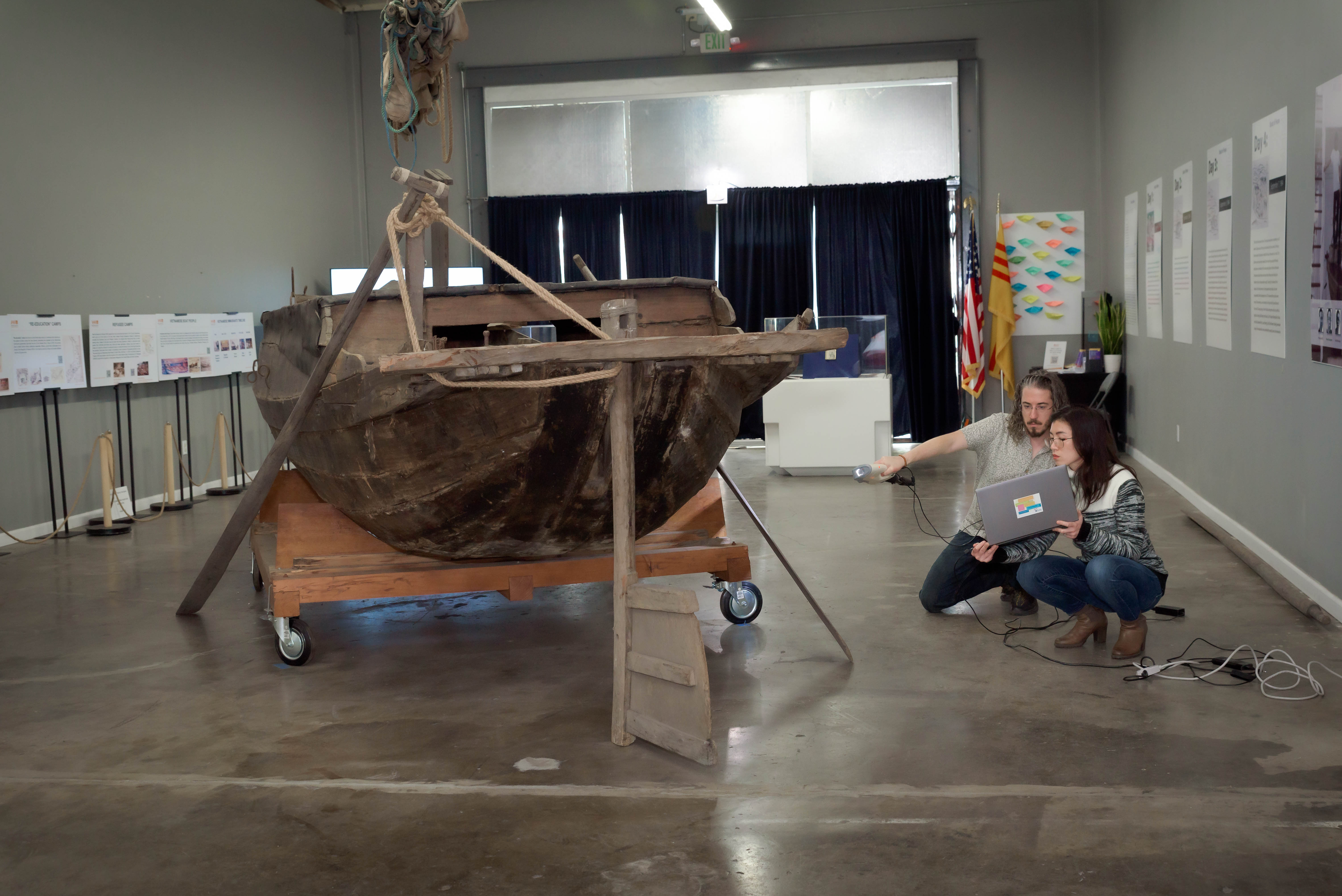
Keeping all of this history in mind, she wondered what, as a classicist and academic with institutional resources, could currently be done that would have material consequences for those who have been historically excluded from this tradition. That eventually gave birth to the Refugee Material Culture Initiative. The project emerged from a community request to preserve Vietnamese diasporic history.
While there already is a museum in Little Saigon in Garden Grove, she noted, it is a grassroots and volunteer-based museum. But no one there has any formal training in museum studies or archaeology. And the question arose as to “what are we going to do with all of the things that our parents and grandparents brought over that they deemed to be important representations of our refugee history,” Nguyen explained.
She had faced a similar challenge while she was teaching at Stanford and working with another museum in San Jose, the Việt Museum. She helped them build a website, digitize a small collection and create exhibits around select artifacts. At the time, she was already planning to come to UCLA. And she only had a few months to work with the San Jose museum to help make their collections accessible to the wider public. Because of her success there, she was then approached by the Vietnamese Heritage Museum in Orange County who wanted her to help create something similar for them.
“I knew that I wanted to start a project that would be more sustainable. I wanted to create an infrastructure to support this kind of work in the long run and not as one-off projects. I was also thinking about refugee communities that don’t have museums to preserve their history. What do we do with these refugee histories, and how can we put refugee histories from different communities in conversation with each other?”
“That’s why when I came to UCLA, I immediately started the Refugee Material Cultural Initiative. The goal of that is to digitize and preserve arts and artifacts from refugee communities, for refugee communities, and to create educational resources about these artifacts,” she explained.
“The bigger goal is to challenge the meaning of refugee beyond the legal definition, which is really restrictive; to understand forced displacement in a much more capacious and humane way.”
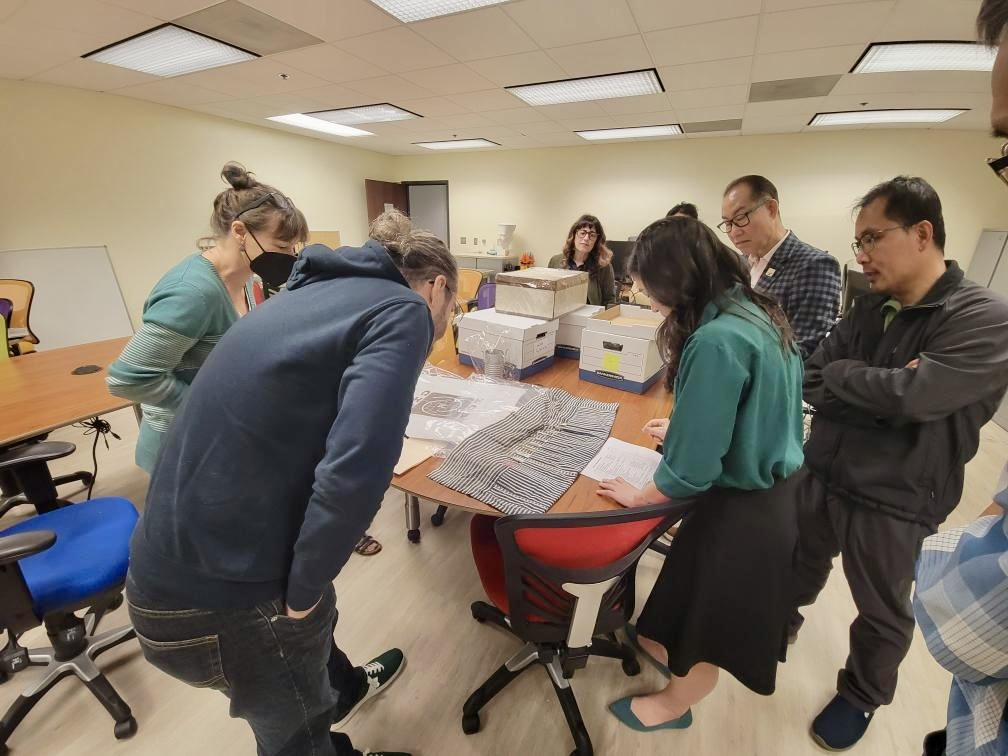
The project is rooted in a community-engaged approach where community members are active collaborators and not just passive subjects to be studied. Artifact donors, museum volunteers and community stakeholders were invited to UCLA before digitization even began to solicit feedback on the project’s workflow and potential outputs. “It is the community members,” Nguyen explains, “who select which artifacts to digitize and how to represent them. We just provide the expertise to make their curatorial choices come to life.” The result is a database of refugee artifacts whose reach does not only extend beyond the academy, but whose very structure was built by a partnership between academics and community members.
Alongside RMCI, Nguyen has also developed a new course, entitled “Decolonizing Refugee Data from Rome to Vietnam,” that is multi-listed with the Department of Classics and the Digital Humanities Program at UCLA. The course examines refugees in the ancient and modern world, prompting students to think more critically about forced displacement across time and space. Throughout the course, students work towards building a digital exhibit that compares artifacts of forced displacement from the ancient Greco-Roman world and from the RMCI database. “The charge for the final project,” Nguyen explains, “is to put the artifacts in dialogue in a way that helps us better understand refugeehood beyond the limiting, modern legal definition. This way, students are actively taking part in the larger conversation about what it means to be a ‘refugee.’”
While the course does teach technical skills, such as how to build an exhibit on StoryMaps, Nguyen presses that the most important thing is to get the students “to think ethically about doing this kind of memory work—to think beyond impressive data points and fancy visualizations, and to infuse the humanity back into refugee representations.”
Her work in these areas undoubtedly contributed to UCLA’s desire to recruit her to teach on the Westwood campus as part of the Mellon Foundation’s Data and Social Justice Curricular Initiatives Program. She sees this as a “great opportunity” to create classes to encompass classics, as well as her interest in social justice.
“What I’m most interested in right now is trying to leverage my institutional resources - my position, my expertise - to redeploy the classics into something that is not used for domination, but that can be used for liberation,” she explained.
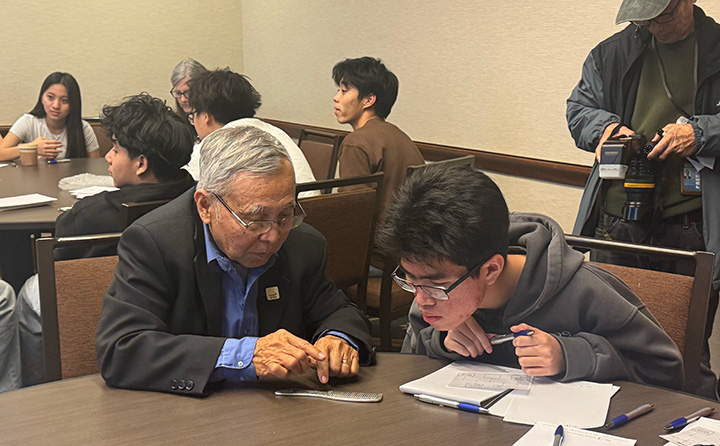 In her community-focused collaborations, one of her efforts involved bussing students to UCLA from Westminster High School where they were joined by elders from the local Vietnamese community, including many who had donated artifacts. She saw this as creating an opportunity to learn from each other about how their history is being preserved and to see the different technologies available, as well as for the students to experience oral history as they interacted with both the objects and the elders. It was such a success that participants were asking her about when the next event would be, she noted.
That schedule will have to wait, as Nguyen will soon be taking time to off to have her first child. She will be back to teaching in the Spring of next year, where she will be offering “Decolonizing Refugee Data from Rome to Vietnam” course. She also has a book that is currently in production with Oxford University Press, entitled Critical Classicality in Vietnam and the Diaspora, and slated to come out soon. “There was a moment where it was a question of whether the baby or the book would arrive the soonest, and now it appears the baby is winning.”
Published on March 6, 2026.