


Past Events
Interested in Cotsen events? Sign up for our mailing list.Speaker: Marilyn Kelly Buccellati, UCLA
2010 was our last excavating season in the ancient city of Urkesh in the northeastern corner of Syria although we went to the site in December 2011 to meet with the local staff to assure continuing their work on conservation and site presentation. With the impossibility of excavating at Urkesh during the war, and in view of the affinities between the third millennium at Urkesh and the Kura-Araxes culture I decided to actively return to my early interests in the southern Caucasus and join an excavation in the Republic of Georgia. In 2013 I began to participate in the Aradetis Orgora excavations of Ca’ Foscari led by Elena Rova. Elena is excavating the third millennium strata and her Georgian partner, Iulon Gogoshidze continues the Georgian excavations of the Late Hellenistic-Early Imperial period palace on the summit of the mound. The strata from the end of the fourth millennium and the early third millennium consist in a number of dwellings containing the characteristic Kura-Araxes ceramics and hearths. The talk will highlight the contributions being made by this area of Shida Kartli (Inner Georgia) to the concept of the “Outer Fertile Crescent.”
Contact Matthew Swanson
Email mswanson@ioa.ucla.edu
Phone
Speaker: James Brady, Cal State University, Los Angeles
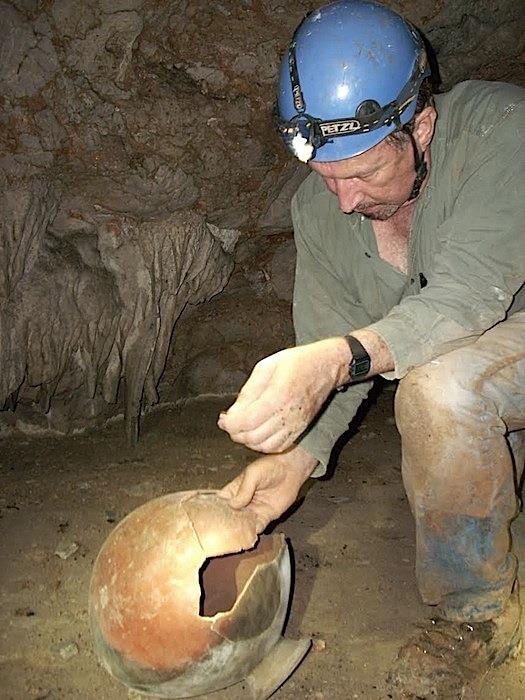
During the last decade of the 19th century, four cave studies of exceptional quality were produced. The best was Eduard Seler’s report on Quen Santo in Huehuetenango, Guatemala because of the exceptional finds still associated with the cave at that time. As a grad student at UCLA, Brady became fascinated with the site after Ted Gutman of the Friends of Archaeology translated the report from German. In 2006 new road construction opened this remote area of the Maya Highlands and permitted a restudy of the caves. Combining 21st century cave archaeology with Seler’s 19th century reporting provides rich portrait of an important Chuj Maya pilgrimage site.
Contact Matthew Swanson
Email mswanson@ioa.ucla.edu
Phone
Speaker: Dr. Ali Drine, Archaeological Researcher and Director of Archaeological Mapping, Institut National du Patrimoine in Tunisia
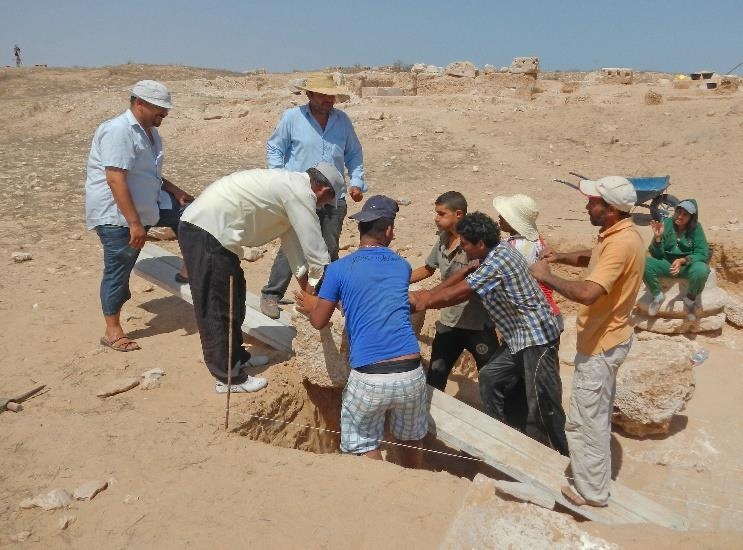
The site of Zita was a political and economic hub situated on the Zarzis Peninsula in the region of Tripolitania, southern Tunisia. Historical sources make reference to the site, including the Itinerarium Antonini and the Tabula Peutingeriana. A Carthaginian foundation, the urban area was incorporated into the Roman Empire with monuments such as a forum, capitol, and likely also a basilica and bath complex. The Carthaginian population persisted in its adherence to Punic identity and religion well into the Roman occupation. A Punic sacrificial precinct (tophet) has yielded over 600 stelae hewed from the limestone on which Zita sits, dozens of urns, and diverse iconographic representations. Neo-Punic graffiti and inscriptions to the goddess Tanit (Calaestis) further indicate the Carthaginian ancestry of the population, which thrived primarily on the production and export of olive oil. Most of the archaeological features are still buried under olive and almond orchards. Since 2012 research is ongoing through a collaboration between the Institut National du Patrimoine (Tunis, Tunisia), UCLA and Brown University.
This lecture is co-sponsored by the Silsbee Chair in African Cultural Archaeology.
Contact Matthew Swanson
Email mswanson@ioa.ucla.edu
Phone
Speaker:
Erik Gjesfjeld, Postdoctoral Fellow, UCLA
Human populations in the past and present have shown a remarkable ability to inhabit diverse and unpredictable environments. This research explores how archaeological remains can examine the use of risk-reducing strategies, such as social networking and technological innovation, in the remote Kuril Islands of Northeast Asia. Results from this research suggest that social safety nets may be an important mechanism for mitigating the effects of environmental unpredictability and that populations tend to become more technologically conservative in unpredictable landscapes. These findings help to highlight some of the misconceptions surrounding the concept of risk and support the future analysis of risk-reducing adaptations using material culture.

Contact Matthew Swanson
Email mswanson@ioa.ucla.edu
Phone
Speaker:
Ioannis Mylonopoulos, Associate Professor, Columbia University
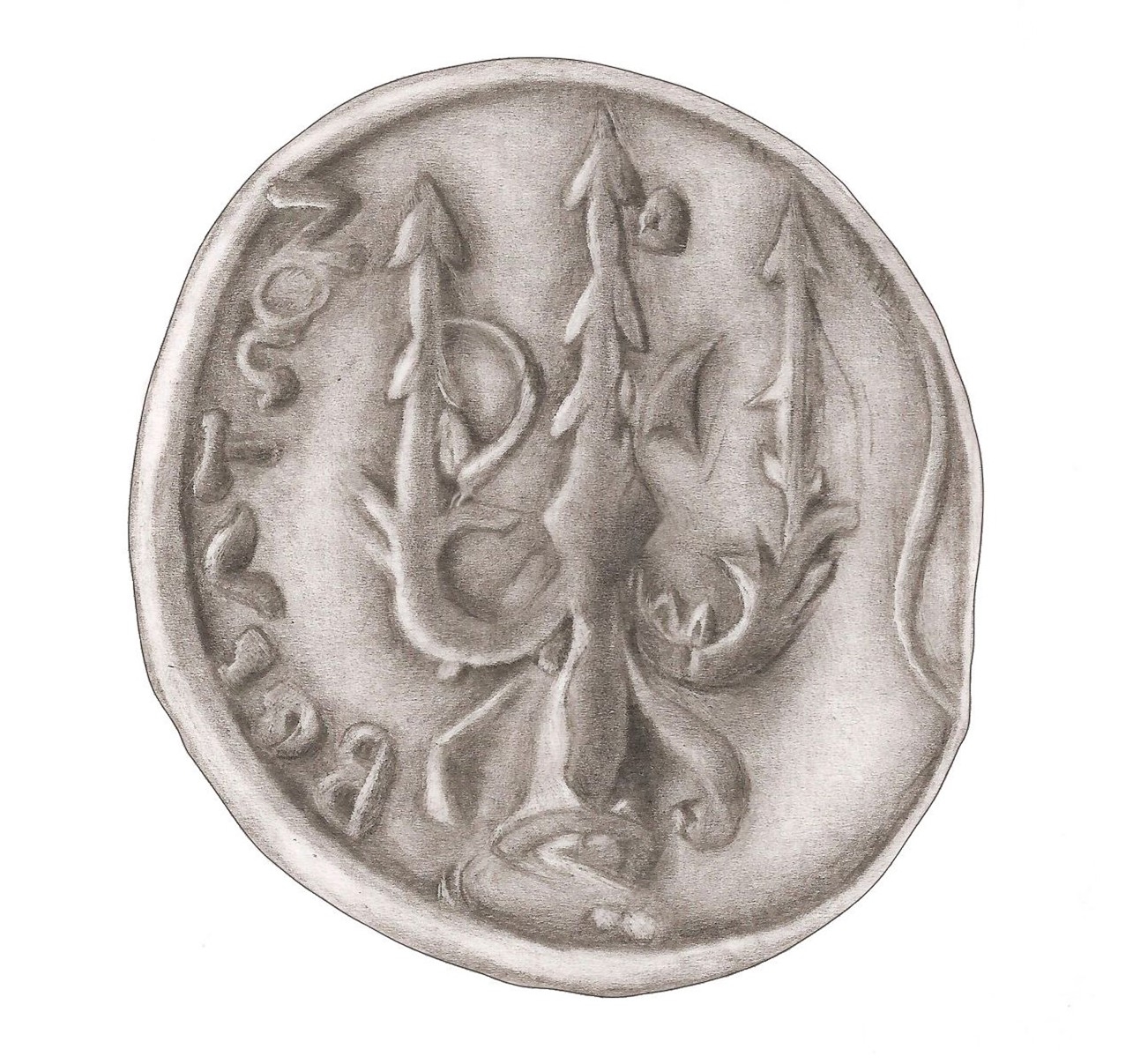
Since 2014, Columbia University’s Department of Art History and Archaeology has conducted excavations and geophysical survey at the sanctuary of Poseidon in Onchestos, the seat of the Boeotian Confederacy and a major sacred site of Central Greece, under the auspices of the Athens Archaeological Society. Excavation focuses on two large areas between Thebes and Haliartos, where geomagnetic survey also provided much information on subsurface architectural remains. The excavation has already yielded a rich array of finds: vases and vase-fragments (several bearing graffiti), numerous bronze objects (including several strigils), bronze and silver coins, weapons (among them a fully preserved sword), objects associated with horse- and chariot races, and many architectural elements (including several architectural terracotas bearing floral and abstract decoration in black, white, and red color on a beige background)
.
Contact Matthew Swanson
Email mswanson@ioa.ucla.edu
Phone
Speaker:
Mark Lawall, University of Manitoba
Contact Matthew Swanson
Email mswanson@ioa.ucla.edu
Phone
Speaker:
Sara Becker, Assistant Professor, UC Riverside
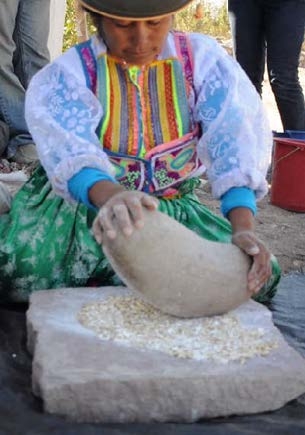
There are a number of approaches in understanding how human civilizations evolved into complex, state-level societies. Labor organization as part of resource management is one way to distinguish these changes and bioarchaeology provides a unique opportunity to study the remains of the actual people who worked within these communities. This research addresses labor organization and distribution within Tiwanaku (AD 500-1100), one of the earliest Andean states in South America. This study examines the impact that state formation had on patterns of human labor observable on the bones of people who lived during the Tiwanaku state. State structure and social organization were evaluated through temporal and spatial labor changes associated with the activity of individuals, in order to provide a comparative framework of specic skeletal evidence to the extant archaeological record. Also, by examining the age and sex of these laborers, peoples’ gender roles or status dierences within this emerging state can be discussed. This investigation answers questions about what tasks people were doing within Tiwanaku, how the state was organized, as well as highlights the importance of reciprocal communal labor networks in order for a complex Andean society to function successfully
.
Contact Matthew Swanson
Email mswanson@ioa.ucla.edu
Phone
Speaker:
Thomas Garrison, Assistant Professor, USC
Contact Matthew Swanson
Email mswanson@ioa.ucla.edu
Phone
Speaker:
Giorgio Buccellati, Professor Emeritus, UCLA Department of Near Eastern Languages and Cultures
Contact Matthew Swanson
Email mswanson@ioa.ucla.edu
Phone
Speaker:
Michael Frachetti, Associate Professor, Washington University in St. Louis
Contact Matthew Swanson
Email mswanson@ioa.ucla.edu
Phone
- ‹ previous
- 22 of 23
- next ›