


Past Events
Interested in Cotsen events? Sign up for our mailing list.Ashley Sharpe
Staff scientist and archaeologist
Smithsonian Tropical Research Institute in Panama
In recent years, multi-isotope analyses have become an increasingly popular method for examining the lives of past humans. Isotope studies can examine questions regarding the diets, health, and movements of people in the past. In combination with osteological, genetic, and archaeological data, we can begin to reconstruct the histories of both individuals and entire communities. This study presents results of an ongoing multi-isotope investigation of pre-Colombian humans in Panama, and compares these results with other isotope studies elsewhere in the Americas. The results illustrate the complex nature of human activities, and the value of incorporating multiple lines of social and ecological evidence to draw interpretations. New and developing methods in isotope research are also explored.
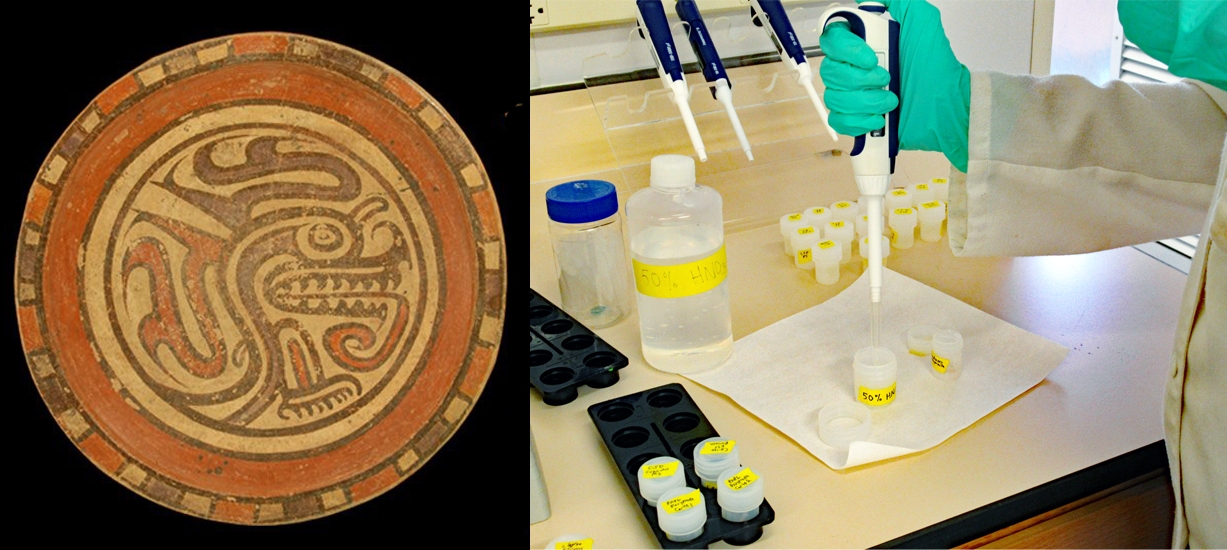
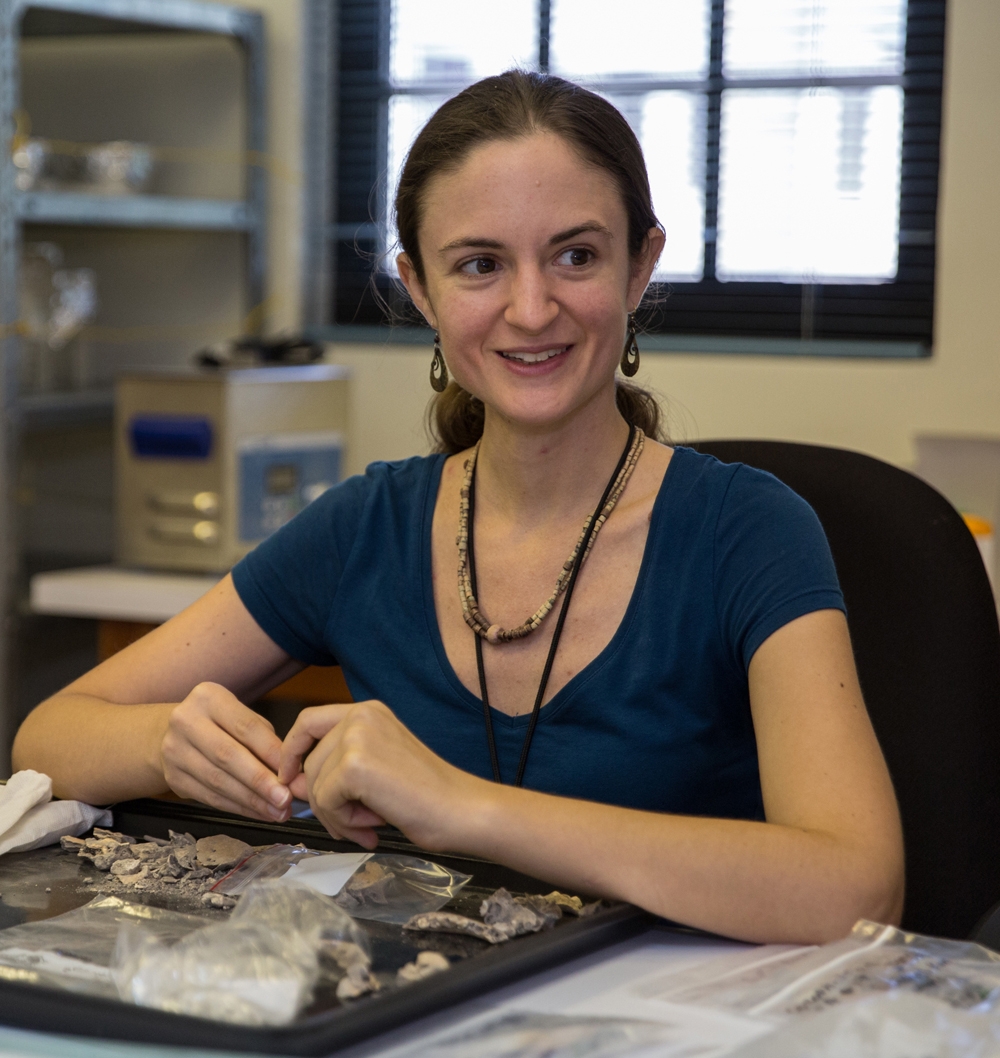 Ashley Sharpe is a staff scientist and archaeologist at the Smithsonian Tropical Research Institute in Panama, where she has worked since 2017. Her research examines human and environmental (particularly animal) interactions in the past, including how humans adapted to different environments over time, and what effects they had on the landscape. She has worked as an archaeologist and faunal analyst on projects throughout Central America, including Ceibal, San Bartolo-Xultun, and Kaminaljuyu in Guatemala, Aguada Fénix in Mexico, Selin Farm in Honduras, and most recently projects in Panama. She obtained a Ph.D. in Anthropology from the University of Florida in 2016.
Contact Michelle Jacobson
Email mjacobson@ioa.ucla.edu
Phone
Stephen Koob
Chief Conservator Emeritus of The Corning Museum of Glass
Friday March 12th, 11:00am - 12:00pm (PT)
Archaeological glass encompasses glass that has been buried, either in the ground or in fresh or salt water. In some cases glass was intentionally buried as grave gifts and can be found in archaeological cemeteries or tombs. Most glasses in museum and private collections do not have provenances and their place of manufacture or origin is unknown, or only known by comparison with actual excavated sources. Archaeological glasses can be preserved in many various states. In some cases the glass has not changed at all, or very little since manufacture, in other cases the glass may be heavily deteriorated and extremely fragile. Archaeologists, excavation personnel, volunteers and conservators who will be responsible for handling glass should be familiar with the proper procedures, materials and techniques that are used in the lifting, handling, packing, transportation and storage of glass vessels and fragments. Severely deteriorated or “weathered” layers on archaeological glasses are extremely sensitive to touch, and should be handled as little as possible.In general, excavated archaeological glasses should be kept dry if found dry; wet, if found wet (underwater retrieval); or damp, if found damp; until careful examination is possible and time is available for treatment.Safe retrieval is a priority.Treatment can involve simple cleaning, or not; consolidation of fragile or lifting surfaces, and possible reassembly using the adhesive Paraloid B-72. The eventual disposition of an object, or group of objects, should be considered before any intervention is carried outwhether the object is to be housed in storage, studied, published, or placed on display. Assembled objects also often require a significantly larger storage space (shelving or cabinets) than individual fragments, which can be bagged or placed in drawers. Restoration beyond this is rarely done in the field, but may be done in a museum.
 Stephen Koob is Chief Conservator Emeritus of The Corning Museum of Glass, having recently retired from the Museum.
Koob holds an MA in Classical Archaeology from Indiana University, and a B.Sc. in Archaeological Conservation and Materials Science from the Institute of Archaeology, University of London. Before joining the Corning Museum staff in 1998, Koob worked for 11 years as conservator, specializing in ceramics and glass, at the Freer Gallery of Art and Arthur M. Sackler Gallery, Smithsonian Institution.
A member of numerous professional organizations, including the Archaeological Institute of America, Koob is also a Fellow of the International Institute of Conservation and the American Institute for Conservation. He recently replaced Dr. Robert Brill as Chairman of Technical Committee 17, which studies the Archaeometry and Conservation of Glass, as part of the International Commission on Glass. He is the author of the book, Conservation and Care of Glass Objects (2006). He is an expert in dealing with “crizzling,” a condition that affects unstable glass.
In 2014 Koob received the Sheldon and Caroline Keck Award from the American Institute for Conservation of Historic and Artistic Works (AIC). The award is given to an individual who has “a sustained record of excellence in the education and training of conservation professionals.” For decades he has devoted time to training conservation interns at The Corning Museum of Glass, and he has taught conservation courses around the world. [https://blog.cmog.org/2014/07/30/conservator-stephen-koob-wins-award-for-dedication-to-training-and-mentoring/]. He has worked, taught and supervised on numerous archaeological sites, including the Agora in Athens, Gordion, Turkey, and Samothrace, Greece.
Contact Jennifer McGough
Email jenmcgough@g.ucla.edu
Phone
Dr. Alison Carter
Assistant Professor, Department of Anthropology, University of Oregon
Wednesday March 3rd, 12:00pm
Register for this Cotsen Virtual Pizza Talk here! You will receive instructions on viewing the talk after registering.
Contact Sumiji Takahashi
Email sutakahashi@ioa.ucla.edu
Phone
Katherine Ridgway, Dr. Dell Upton, Burt Pinnock
Friday February 26th, 11:00am - 12:30pm (PT)
Conservation and Confederate Monuments preserve and protect what and how
The question of how Americans should address public monuments to the Confederacy, problematic symbols of white supremacy, received significant re-examination in the summer of 2020, sparking fresh discourse on how these monuments contribute to our understanding of history, cultural values, and identity and what actions can and should be taken in response.
This panel will explore how professionals in the fields of architecture, conservation, and history are currently addressing these topics and their visions for the fate of these works.
 Katherine Ridgway
Katherine Ridgway has been the State Archaeological Conservator for the Virginia Department of Historic Resources (DHR) for eight years. In this position, she has recently provided advice on the conservation and preservation considerations involved when communities and agencies in the Commonwealth are working with Confederate and other contested monuments. She helped to write the DHR Guidance Regarding Confederate Monuments document and participated in the AIC Contested Monument Working Group.
Katherine is a William and Mary graduate and received her Master’s degree from Durham University in Northern England in the Conservation of Historic Objects. She has over 20 years of conservation experience, including working as an Assistant Conservator at the Field Museum in Chicago and as the Fine and Decorative Arts Conservator for George Washington’s Mount Vernon. She is also a Fellow in the AIC and the President of the Virginia Conservation Association.
 Dr. Dell Upton
Architectural historian Dell Upton is Distinguished Research Professor in the Art History Department at UCLA where he taught for twelve years before retiring in 2020. He previously taught at Berkeley and the University of Virginia. Upton is the author of What Can and Can’t Be Said: Race, Uplift and Monument Building in the Contemporary South (Yale, 2015), as well as numerous articles about contemporary monument debates in the United States and Italy. Among his other books are American Architecture: A Thematic History (Oxford, 2019) and Another City: Urban Life and Urban Spaces in the New American Republic (Yale, 2008). During the current academic year, he is serving as Kress-Beinecke Professor at the Center for Advanced Studying the Visual Arts at the National Gallery of Art, Washington, D.C.
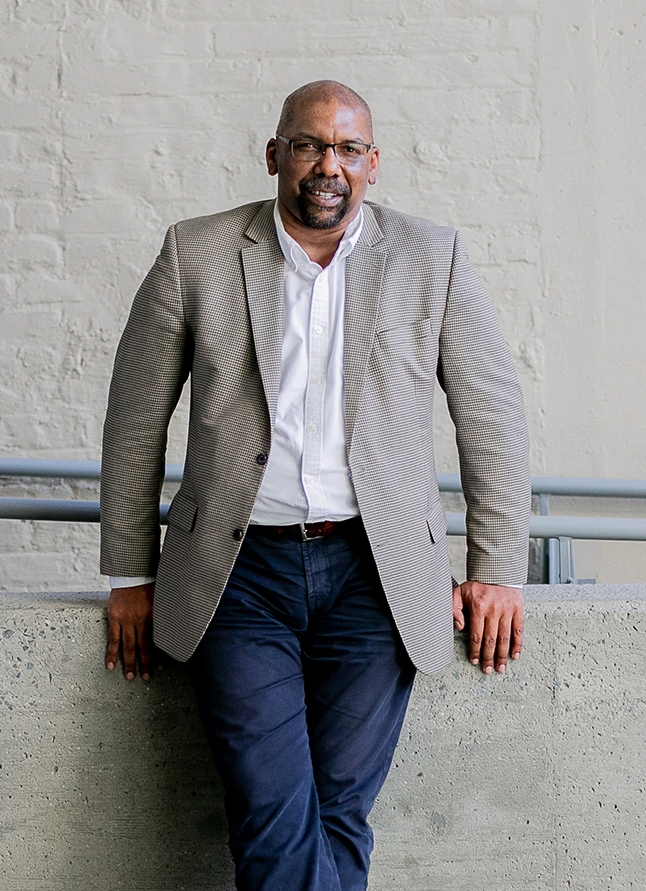 Burt Pinnock, FAIA is a principal and chairman of the board at Baskervill, a 123-year-old design firm. For Burt, architecture and design isn’t a job; it’s his personal contribution to the wellbeing and vitality of our communities. Over his 30-year career Burt’s commitment and passion has created impactful work for neighborhoods, cultural institutions and forward-thinking companies, including the Black History Museum and Cultural Center of Virginia, Civil Rights Memorial Plaza at the Virginia Capitol, Colbrook Affordable Housing masterplan and more. A founder and board member of the nonprofit Storefront for Community Design, Burt currently serves as Chairman of the Commonwealth of Virginia’s Art and Architectural Review Board and is a board member of the Legal Aid Justice Center, amongst numerous other board and committee engagements. Burt is a graduate of Virginia Tech and calls Richmond, Virginia home.
Contact Jennifer McGough
Email jenmcgough@g.ucla.edu
Phone
Dr. Giorgio Buccellati, Research Professor and Director, Mesopotamian Lab, Cotsen Institute of Archaeology, UCLA
Dr. Marilyn Kelly-Buccellati, Visiting Professor, Cotsen Institute of Archaeology, UCLA
Wednesday February 24th, 12:00pm (PT)
Urkesh was one of the first cities in history, dating back to the fourth millennium. It is, today, a large cultural hill, known as Tell Mozan, in northeastern Syria, an area ravaged by war.
The Mesopotamians were already aware of the history hidden in the tells which, even then, dotted the countryside. Here is a Sumerian text:
Where is Gilgameš, who, like (his ancestor) Ziusudra, sought (eternal) life? Where are those great kings who came long before our own days? Above there are the houses where they dwelt, but it is below that there are the houses that last forever.
And here is a Babylonian text:
Go up any of the ancient tells and walk about see the skulls of people from ages past and from yesteryear: can you tell the difference?
Even the word for "tell" is still the same today as it was then. We may see here, four millennia ago, the beginning of community archaeology. It is the awareness of a life hidden in the ground where our roots sink deeply.
This will be both a personal tale and one about theory. Personal, because we want to share how we have come gradually to feel more and more the impact of what the question mark in the title of our talk implies. And yet theoretical, because we have always questioned this growing awareness of ours for conservation and heritage, trying to see why community archaeology is in fact, as it must be, simply and purely "better" archaeology.
Register for this Cotsen Virtual Pizza Talk here! You will receive instructions on viewing the talk after registering.

Contact Sumiji Takahashi
Email sutakahashi@ioa.ucla.edu
Phone
Dr. Chris Rodning
Professor, Department of Anthropology, Tulane University
Wednesday February 17th, 12:00pm (PT)
During the sixteenth century AD, several Spanish conquistadors led expeditions that traversed large areas of what is now the southeastern U.S., the province of the Americas known to Iberians as La Florida, and an area of Native North America home to groups of people associated with manifestations of the Mississippian cultural tradition, and the ancestors of historic and modern Catawba, Cherokee, Creek, Chickasaw, Choctaw, and other Indigenous peoples. One of the most prolonged early encounters and entanglements between Indigenous people and Iberian colonists in the northern borderlands of La Florida was centered at the Berry site, located along the eastern edge of the Blue Ridge Mountains in western North Carolina. This site represents the location of a major settlement within the Native American province and polity of Joara, and the location of the Spanish colonial outpost of Fort San Juan and its related town of Cuenca, which was founded in late 1566 but was abandoned in early 1568. Archaeological excavations at the Berry site have identified remnants of Native American occupation before the Spanish entradas led by Hernando de Soto (1539-1543) and Juan Pardo (1566-1568), the archaeological footprints of Fort San Juan and structures nearby that housed Pardo and his men, and remnants of structures and features that likely postdate the Indigenous conquest of Fort San Juan, including wood-and-earth structures and an earthen mound. This talk considers documentary evidence from the Soto and Pardo expeditions, with particular emphasis on the Pardo entradas between 1566 and 1568, as well as archaeological finds at the Berry site. My interpretive focus, and I hope the focus of some comment and conversation, will be the architectural history of the built environment at the site, and what we can learn from it about the nature and culture of "first contacts" and interactions among Indigenous peoples and Iberian colonists in the Native American South.
Register for this Cotsen Virtual Pizza Talk here! You will receive instructions on viewing the talk after registering. 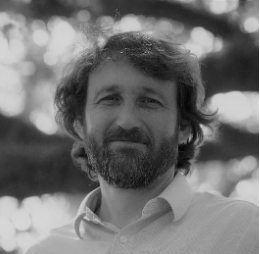
Contact Sumiji Takahashi
Email sutakahashi@ioa.ucla.edu
Phone
Over Zoom
Collaboration with Anthropology Club
Discussion of informational interviews, networking, and how to use your network to find field school and internship opportunities
Contact
Phone
Dr. Glenn Wharton
Lore and Gerald Cunard Chair, UCLA/Getty Program in the Conservation of Archaeological and Ethnographic Materials, Cotsen Institute of Archaeology, UCLA
Wednesday February 10th, 12:00pm (PT)
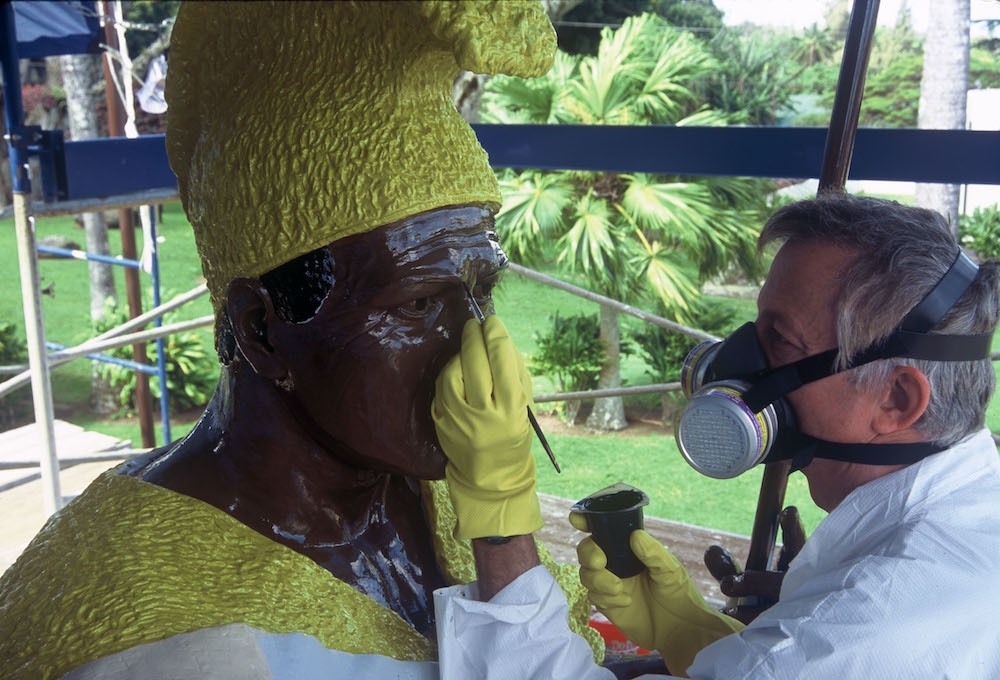
The community-based conservation of the Kamehameha I sculpture on the island of Hawai’i shows how
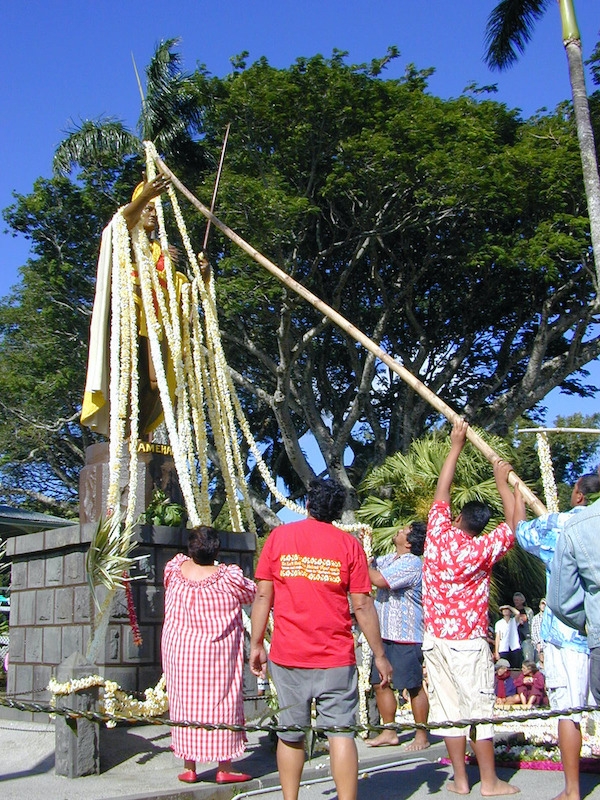 local residents can engage in negotiating the meaning of cultural heritage and affect how their past is represented. Professor Wharton will discuss his three-year collaboration with residents in a semi-rural Hawaiian community to research the material and social history of the sculpture, leading to a community decision about how to conserve it. The Kamehameha I sculpture was commissioned in 1878 to commemorate Captain Cook’s “discovery” of the Hawaiian Islands and promote a western style monarchy. Modeled in the image of a Roman emperor while wearing highly symbolic feathered garments, the figure has come to function as a spiritual, economic, educational, cultural, and political object. The participatory project aimed not only to conserve the painted brass sculpture, but also to enable a process of local control over narratives of the Native Hawaiian past. Wharton's ethnographic research reveals tensions that exist within the multicultural, post-plantation community, as local residents voiced notions of what it means to be Hawaiian and what stories should be told about the Native Hawaiian past.
Register for this Cotsen Virtual Pizza Talk here! You will receive instructions on viewing the talk after registering.
Contact Sumiji Takahashi
Email sutakahashi@ioa.ucla.edu
Phone
Presented by
Dr. Stephen Acabado
Associate Professor, Department of Anthropology, UCLA
 Current research in Philippine archaeology is pushing back against the colonial foundations of the discipline and the hegemonic status of the Three Age System in the region, including the broader Southeast Asian archaeology. The Three-Age Model, developed for Scandinavia, was imposed on Southeast Asia through its application in Northeast Thailand archaeological record, particularly the reference to the Bronze Age and the farmer-led migration in island Southeast Asia and the Pacific. Recent archaeological data now refute these models. In the Philippines, the long-accepted Neolithic migration by rice farmers, is repudiated the absence of wet-rice in the archaeological record that predates the 16th century. Following the lead of recent scholars, Acabado stresses that Philippine archaeology, in particular, and Southeast Asian archaeology, in general, must reject these essentialist frameworks in favor of forward-facing “emergent” paradigms. Doing so allows Southeast Asian archaeologists to decolonize chronology building and devote less time to worrying about origins to focus instead on understanding process and to incorporating Indigenous perspectives in archaeological interpretation.
Register in advance for this meeting:
https://ucla.zoom.us/meeting/register/tJMlf-2qpzIuGt02NbLgx-ULeGHi1lDJWNmC
After registering, you will receive a confirmation email containing information about joining the meeting.
 Stephen Acabado is associate professor of anthropology at UCLA. His research revolves around indigenous responses to colonialism, particularly in the Philippines. He is a strong advocate of an engaged archaeology where descendant communities are involved in the research process.
Grace Barretto-Tesoro is professor of archaeology at the University of the Philippines Diliman. Her archaeological work is focused on changing representation of various segments of society from the late precolonial period to the early Spanish period Philippines.
Contact Michelle Jacobson
Email mjacobson@ioa.ucla.edu
Phone
Anna Funke
Conservator, Warren Lasch Conservation Center, Clemson University
February 3rd, Wednesday 12:00pm (PT)
The Warren Lasch Conservation Center has been working on the H.L. Hunley submarine since it was 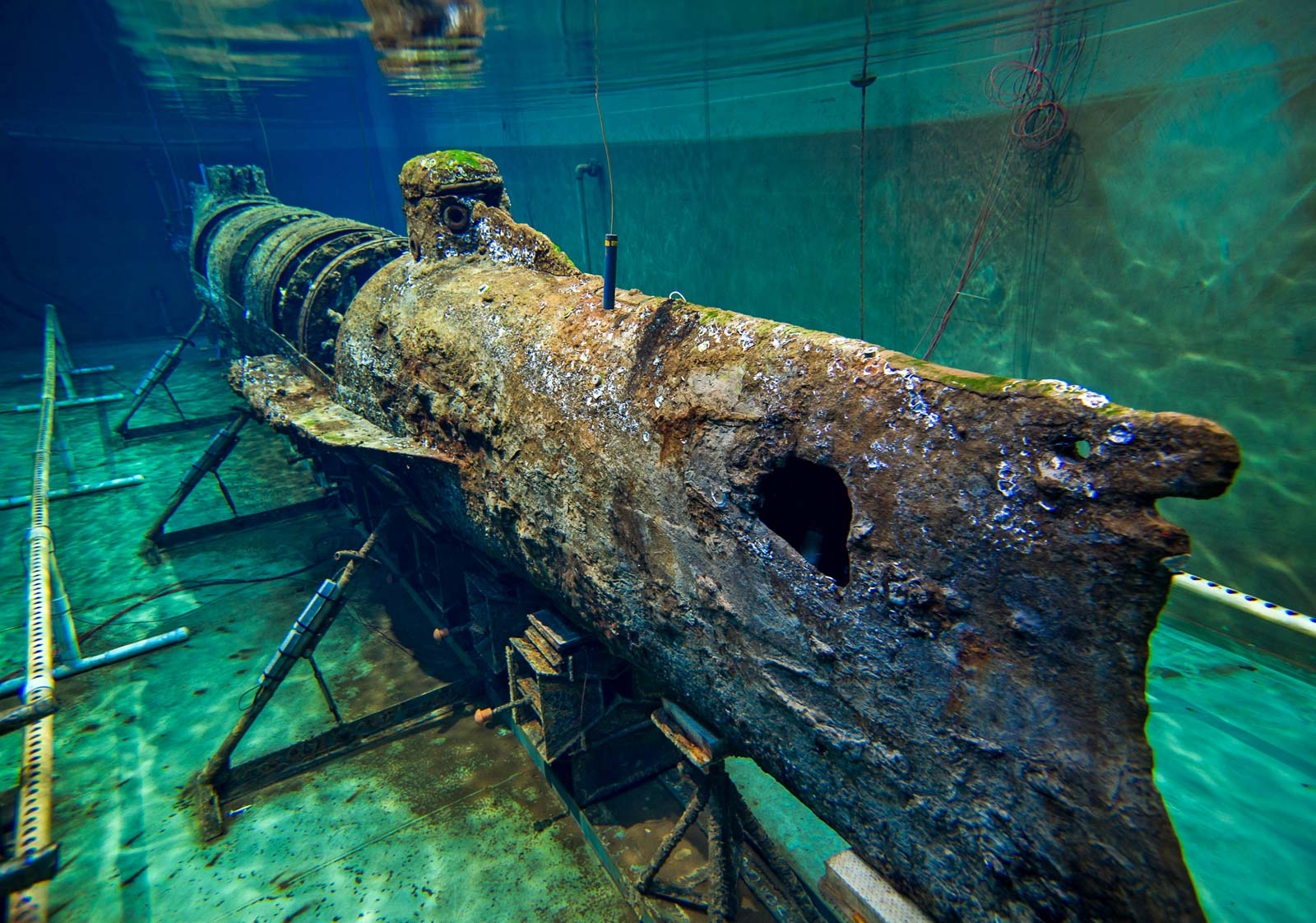 raised from Charleston Harbor in 2000. Renown for being the first successful combat submarine, it was designed to break the blockade of Charleston, in the later years of the Civil War. The archaeological work on the submarine has provided fascinating insights into the military, social and technological history of the time. Now that the excavations are largely completed, the project is primarily focused on the complex conservation process to prepare the submarine for broader public display. This talk will give an overview of the history of the submarine itself as well as the interdisciplinary project that has been built up around it.
Register for this Cotsen Virtual Pizza Talk here! You will receive instructions on viewing the talk after registering.
Contact Sumiji Takahashi
Email sutakahashi@ioa.ucla.edu
Phone
- ‹ previous
- 20 of 52
- next ›