


Past Events
Interested in Cotsen events? Sign up for our mailing list.Due to the evolving public health situation surrounding COVID-19 this event has been cancelled. The well-being of our Cotsen community and all attendees at our events is of the highest importance to us.
SPEAKERS:
Dr. Jason De León
Professor
UCLA Department of Anthropology
Austin Shipman
Program Manager for the Undocumented Migration Project
Gabe Canter and Nicole Smith
Exhibition Coordinators for Hostile Terrain 94
ABSTRACT:
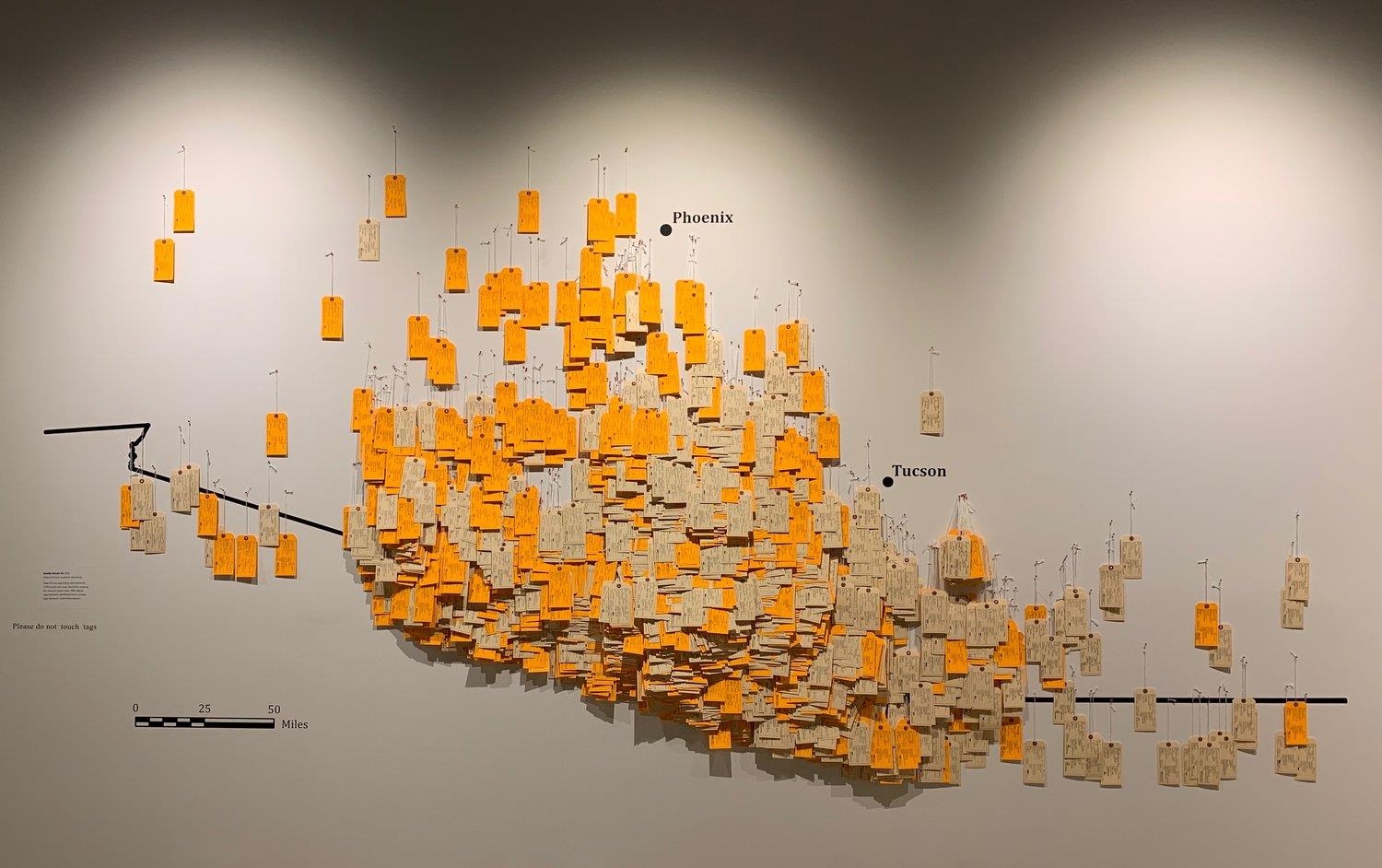
In 1994 the U.S. Border Patrol launched the immigration enforcement strategy known as “Prevention Through Deterrence.” This was a policy designed to discourage undocumented migrants from attempting to cross the border near urban ports-of-entry. With traditional crossing points closed off, it was expected that people would attempt to cross the border in more remote and depopulated regions where the natural environment would act as a deterrent to movement. It was anticipated that the difficulties people experienced while hiking dozens of miles across what the Border Patrol deemed the “hostile terrain” of places like the Sonoran Desert of Arizona would discourage migrants from attempting the journey. This strategy failed to deter border crossers. Instead, more than six million people have attempted to migrate through the Sonoran desert of Southern Arizona since 2000 and at least 3,199 people have died enroute. In the fall of 2020, the pop-up installation “Hostile Terrain 94” (HT94), designed by the Undocumented Migration Project, will be realized simultaneously in 150 locations around the globe. These installations are 25 foot long maps of the Arizona/Mexico border with ~3200 hand written toe tags representing the recovered bodies of people who have died between 2000 and 2020. In this talk we outline the development of this global exhibition, highlight our model for public facing anthropological work, and discuss the political and cultural implications of trying to visualize this type of archaeological and forensic data for a global audience.
Contact Sumiji Takahashi
Email sutakahashi@ioa.ucla.edu
Phone 310-825-4169
SPEAKER: 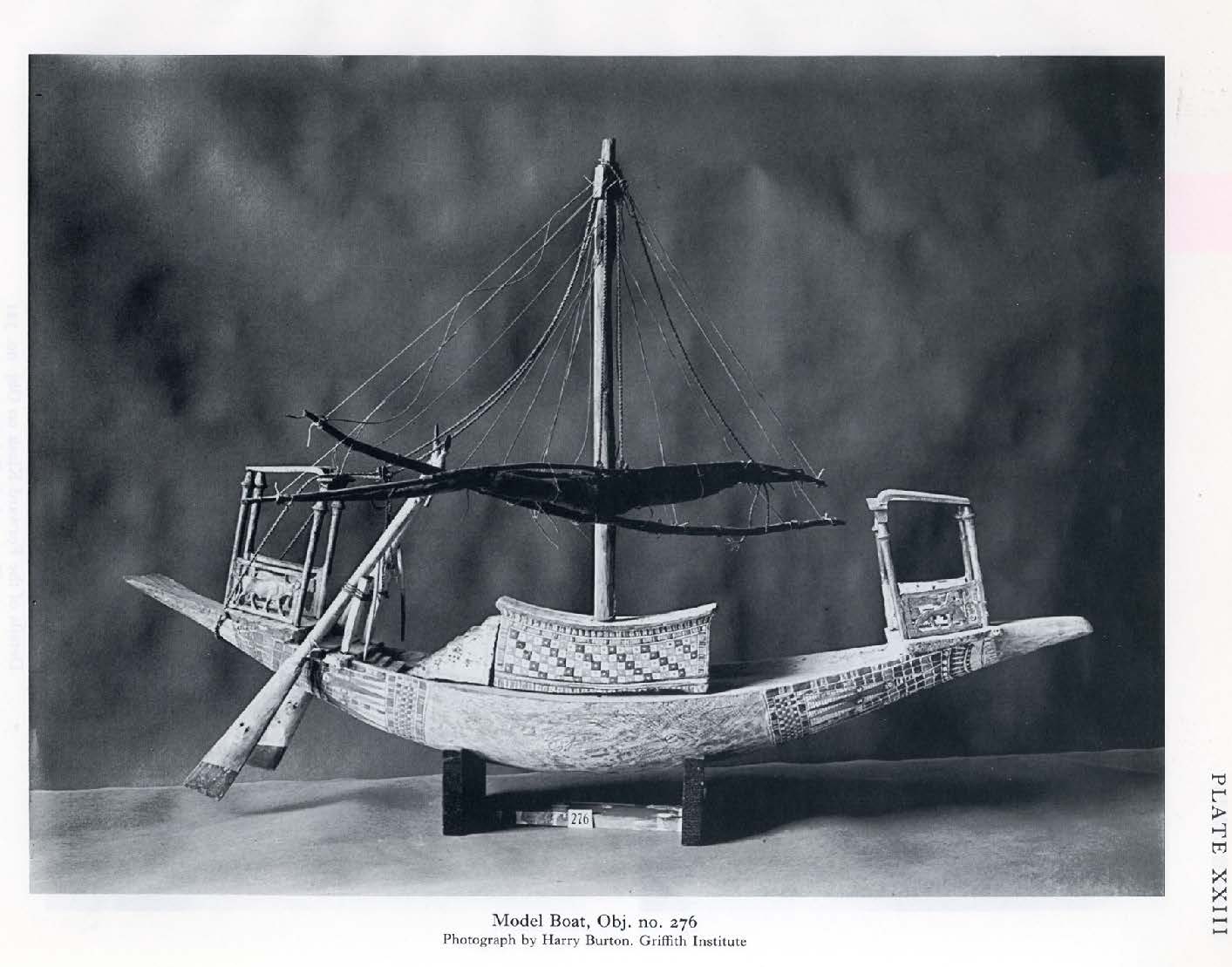
Dr. Caroline Sauvage
Associate Professor
Loyola Marymount University
Bellarmine College of Liberal Arts
ABSTRACT:
Sails were one of the most important fitting of Late Bronze Age ships, and yet, they are understudied because of the lack of archaeological remains. Although iconography has been largely scrutinized to gain knowledge concerning the shape of sails, their use and their riggings, sail manufacture has not yet been investigated properly. Tools for the production of textiles attest to their diverse forms and places of production, as well as to the types and dimensions of fabrics being produced, and the types of fibers being used. This talk proposes to address the question of sail manufacture throughout the eastern Mediterranean by studying textile tools within their archaeological coastal contexts, by exploring the necessary resources, skills and labor time, as well as by looking at ancient texts from the Aegean, the Levant and Egypt. We will include data from experimental archaeology used in maritime archaeology and in textile research in order to assess the logistics of sail production in the Late Bronze Mediterranean.
Contact Sumiji Takahashi
Email sutakahashi@ioa.ucla.edu
Phone 310-825-4169
SPEAKER:
John Cherry
Professor of Archaeology and Classics
Joukowsky Institute, Brown University
ABSTRACT:
Until quite recently, archaeologists have supposed that the seas and oceans represented a barrier to human dispersal, and that islands were among the last places on earth to be colonized by people, only fairly recently, as part of the worldwide spread of modern humans. But is that picture still correct? Startling new data have come to light just in the last few years, in parts of the Mediterranean and in island Southeast Asia, that have been claimed as evidence for a far longer antiquity for seafaring, reaching back hundreds of thousands, and perhaps as much as a million years. Naturally, these claims have attracted widespread attention and much discussion — and not only among archaeologists. This lecture outlines what we know, with reasonable certainty, about patterns of global maritime dispersal in the past few tens of thousands of years, before turning to present the new evidence and its strengths and weaknesses. In trying to understand it, we will need to consider information (amongst other things) from ethnographic analogy, experimental seafaring, and our current knowledge of the relative configurations of land and sea over the course of the Pleistocene era. Some of the bold assertions made in the past few years require more supporting data before they can be accepted. That cautious conclusion does not detract from the excitement and importance of this fast-moving field of research in archaeology.
Contact Aaron A. Burke (aaburke@ucla.edu) for more information.
Contact Sumiji Takahashi
Phone 310-825-4169
SPEAKER:
Dr. Willeke Wendrich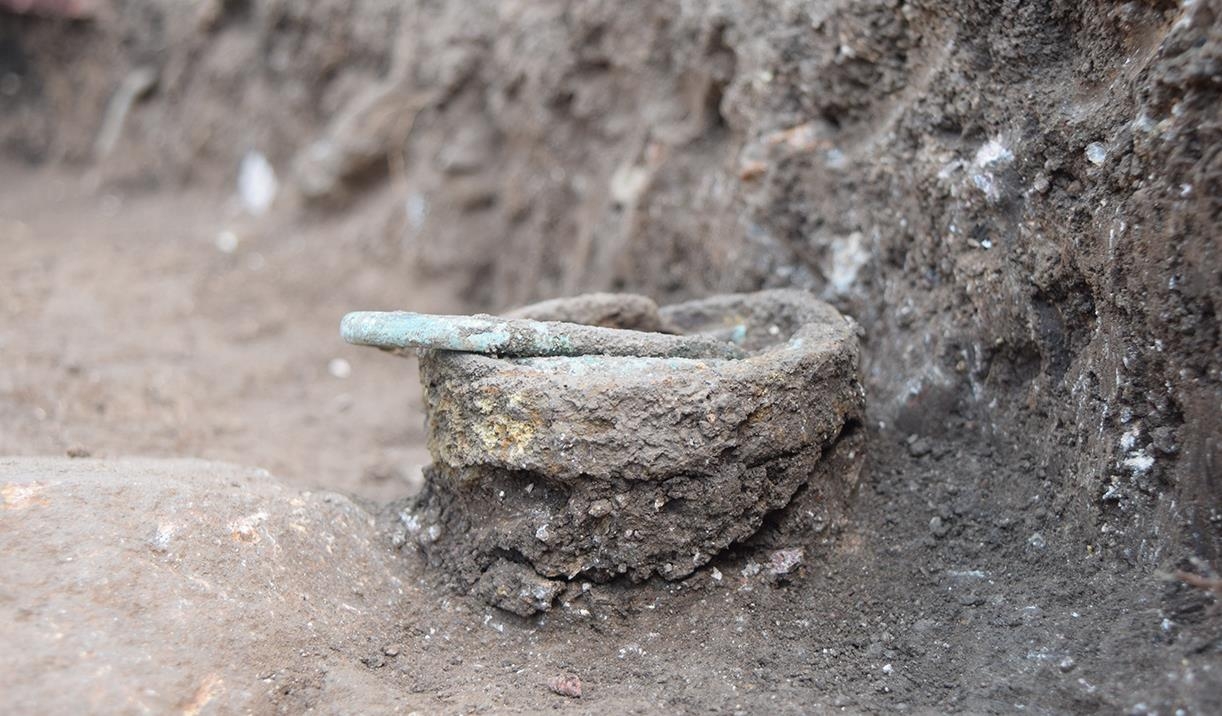
Professor
Dept. of Near Eastern Language and Cultures
UCLA
ABSTRACT:
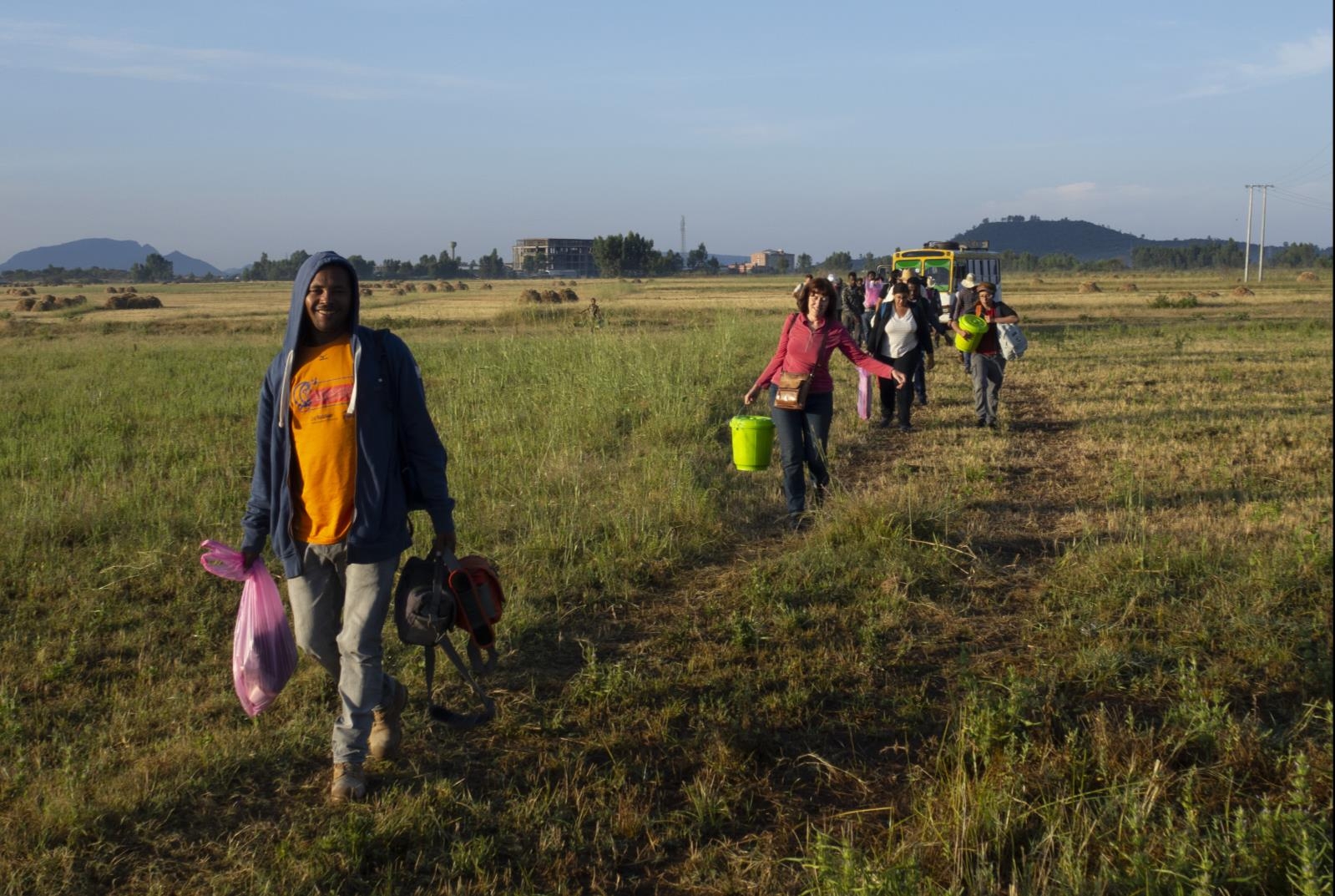
After five years of work in Ethiopia the UCLA Shire Archaeological Project has established close collaborations with four Ethiopian universities, national, regional and local offices and the population living around the site of Mai Adrasha. In December 2019 this culminated in a workshop to discuss the future of the archaeological site of Mai Adrasha. I will discuss the results of the excavations and survey in the tension field of different ideas and interests in both the past and the future.
Contact Sumiji Takahashi
Email sutakahashi@ioa.ucla.edu
Phone 310-825-4169
SPEAKER:
Dr. Richard Hansen
Adjunct Professor
Department of Anthropology
University of Utah
ABSTRACT:
Excavations over four decades in the Mirador Basin have revealed perspectives of the origins, dynamics, and demographic collapse of the Preclassic Maya societies that flourished in northern Guatemala and southern Campeche, Mexico. The identifications of the social, political, and economic catalysts that created the cultural complexities in the Maya Lowlands have allowed new explanatory models responsible for the rise of cultural complexity during the Middle and Late Preclassic periods of Maya civilization (1000 BC-A.D. 150). Mapping and excavations in 51 ancient cities of various sizes throughout the entirety of the Basin have also revealed the ideological, logistical and economic dynamics that created a homogeneous society that merged to form one of the earliest state level societies in the Western Hemisphere. Yet, even in light of the economic, political, and ideological complexities of the Preclassic Maya in the Mirador Basin, a series of multicausal factors contributed to the long term demographic collapse of civilization in the area. The synthesis of the entire panorama of cultural process in the Mirador Basin provides new understandings of the saga of humanity found in emergent Maya civilization that is now being revealed for the first time.
Contact Sumiji Takahashi
Email sutakahashi@ioa.ucla.edu
Phone 310-825-4169
Mariana Favila Vázquez
Archeological studies regarding pre-Hispanic mechanisms of environment appropriation have been crucial to explain the complexity of Mesoamerican societies. However, an ontological dichotomy of water and land has permeated these investigations for decades. The activities practiced on the mainland, such as agriculture, among many others, are the preferred focus of interest for explaining indigenous social and historical processes. The activities and the role of the aquatic spaces are generally considered subordinate or secondary concerning the former. Through archaeological, iconographic and historical
evidence this paper argues that Mesoamerican cultures, such as the Olmec, Maya, and Aztec, had a perception of the environment in which, although water was of course distinguished from the mainland, it was not seen exclusively as an opposite space, liminal and independent to the political, social, economic and religious dynamics of the indigenous people. Evidence of this is the development of a complex nautical technology that was permeated by the religious and ideological configurations of the societies that produced it. Consequently, navigation was practiced as a landscape connectivity system that integrated the use of waterways, coastal lagoons, wetlands, and estuaries, along with roads and activities in the mainland. This study allows for rethinking the valuation of aquatic spaces and getting closer to the local perception of the environment, in which the aquatic spaces are no longer the limit of the territories inhabited by humans.
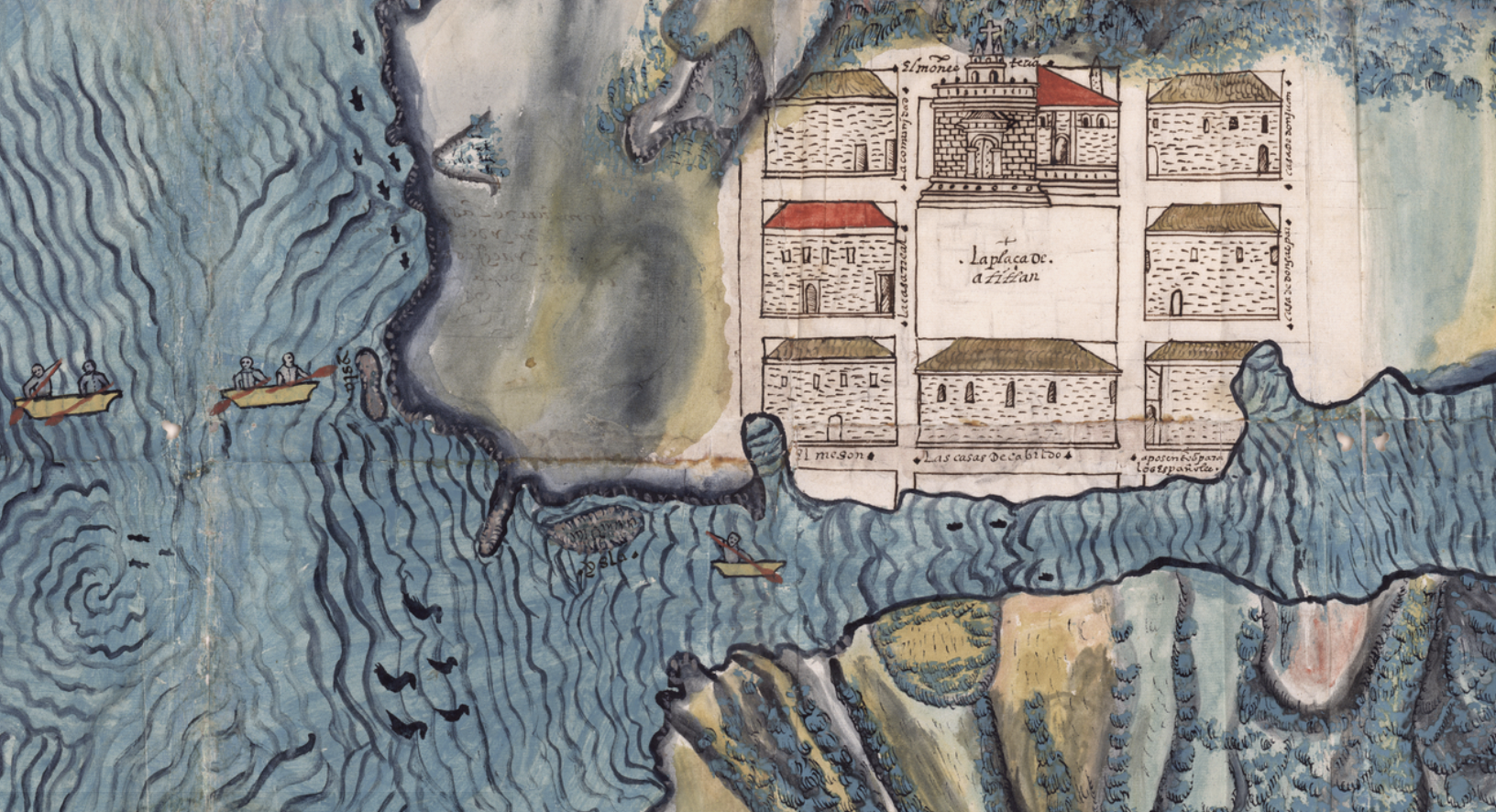
This talk is part of the El Mar Y Sus Metáforas Series and will be in Spanish. For more information about this talk or series, please contact Jimena Rodriguez.
Mariana Favila Vázquez is a Professor of Archeology at the ENAH (National School of Anthropology and History, México) and a research associate in the project “Digging into early colonial Mexico: a large-scale computational analysis of 16th century historical sources” of the University of Lancaster, United Kingdom and the Museo de Templo Mayor in Mexico. Her research has focused on indigenous pre-Hispanic and colonial navigation traditions in the Mesoamerican cultural area.
This talk is co-sponsored by the UCLA Latin American Institute, the Cotsen Institute of Archaeology and the Department of Spanish and Portuguese.
Contact Jimena Rodriguez
Email jimenarodriguez@ucla.edu
Phone
SPEAKER: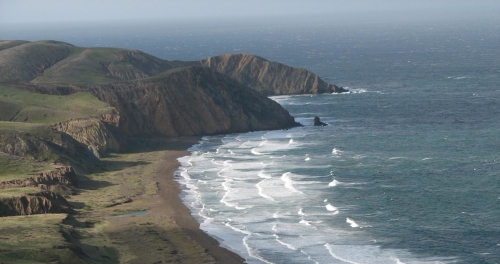
Dr. Amy E. Guisick
Associate Curator
National History Museum of Los Angeles County
ABSTRACT:
Methodological advances and innovative research are reshaping how we look for and understand human dispersals and adaptations on maritime landscapes. Refinements in paleoenvironmental reconstructions and search techniques have resulted in discoveries that challenge outdated theories of island and coastal regions as marginal to human migration, settlement, and subsistence. The Northern Channel Islands of California have become a focal point for this maritime research as new discoveries have shown this region to be integral for understanding initial human dispersals and early occupations in the New World. This region has also become a proving ground for methodological advances that are refining how we integrate land- and seabased data into project designs that recognize both the landscape and seascape as a complex maritime space integral to maritime societies. Recent research has focused on the terrestrial and submerged portions of the island landscape that were intact and subaerial during initial human dispersal to the islands and during the late Pleistocene and early Holocene island occupations. By integrating paleoenvironmental reconstructions, archaeology, historical ecology, and terrestrial and marine geology researchers are striving to recreate the paleoenvironment and paleolandscape present during initial island occupations. These data may be critical to clarify early island colonization and adaptions strategies of the first Americans.
Contact Sumiji Takahashi
Email sutakahashi@ioa.ucla.edu
Phone 310-825-4169
Since the mid-1990s’, the U.S. federal government has relied on a border enforcement strategy known as “Prevention Through Deterrence.” Using various security infrastructure and techniques of surveillance, this strategy funnels undocumented migrants towards remote and rugged terrain with the hope that mountain ranges, extreme temperatures, and other “natural” obstacles will deter people from unauthorized entry. 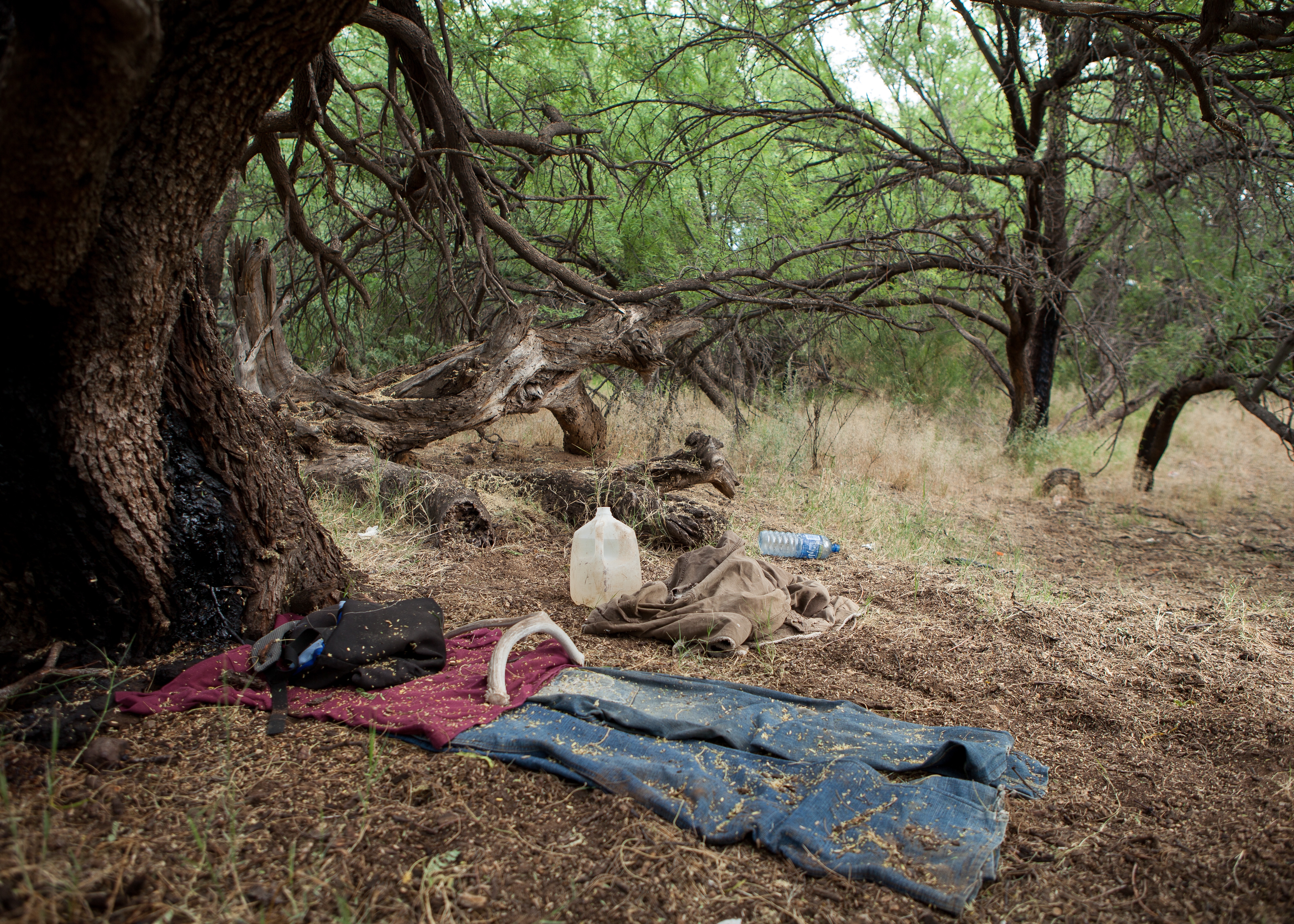 Thousands of people have perished while undertaking this dangerous activity. Since 2009, the Undocumented Migration Project has used a combination of archaeological, forensic, and ethnographic approaches to understand the various forms of violence that characterize the social process of clandestine migration. In this presentation, De León will discuss how the "archaeology of the contemporary" can help make this process visible and argue that the types of deaths that migrants experience in the desert are both violent and deeply political.
The Land of Open Graves will challenge audiences to confront the complexity of international migration and American policy choices.
Reservations requested. Click here to RSVP by February 5. For more information call 310-825-4004.
Friends of the Cotsen Institute are invited to a private reception with Professor De León at 6pm. To learn more about the Friends visit their page or contact Michelle Jacobson at mjacobson@ioa.ucla.edu.
 Jason De León, Ph.D.
Professor of Anthropology and Chicana/0 Studies
University of California, Los Angeles
Executive Director, Undocumented Migration Project
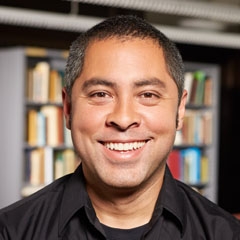
Jason De León, 2017 MacArthur Fellow, is Professor of Anthropology and Chicana/o Studies at the University of California, Los Angeles with his lab located in the Cotsen Institute of Archaeology. His multidisciplinary approach to the study of migration from Latin America to the United States is bringing to light the lives and deaths of clandestine migrants crossing the U.S.–Mexico border into the Sonoran Desert of Arizona. He combines ethnographic analysis of migrant stories, forensic science, and archaeological research in his efforts to understand this process—who makes the journey, the routes, the means of survival and manner of death—and the human consequences of immigration policy.
Contact Michelle Jacobson
Email mjacobson@ioa.ucla.edu
Phone 310-825-4004
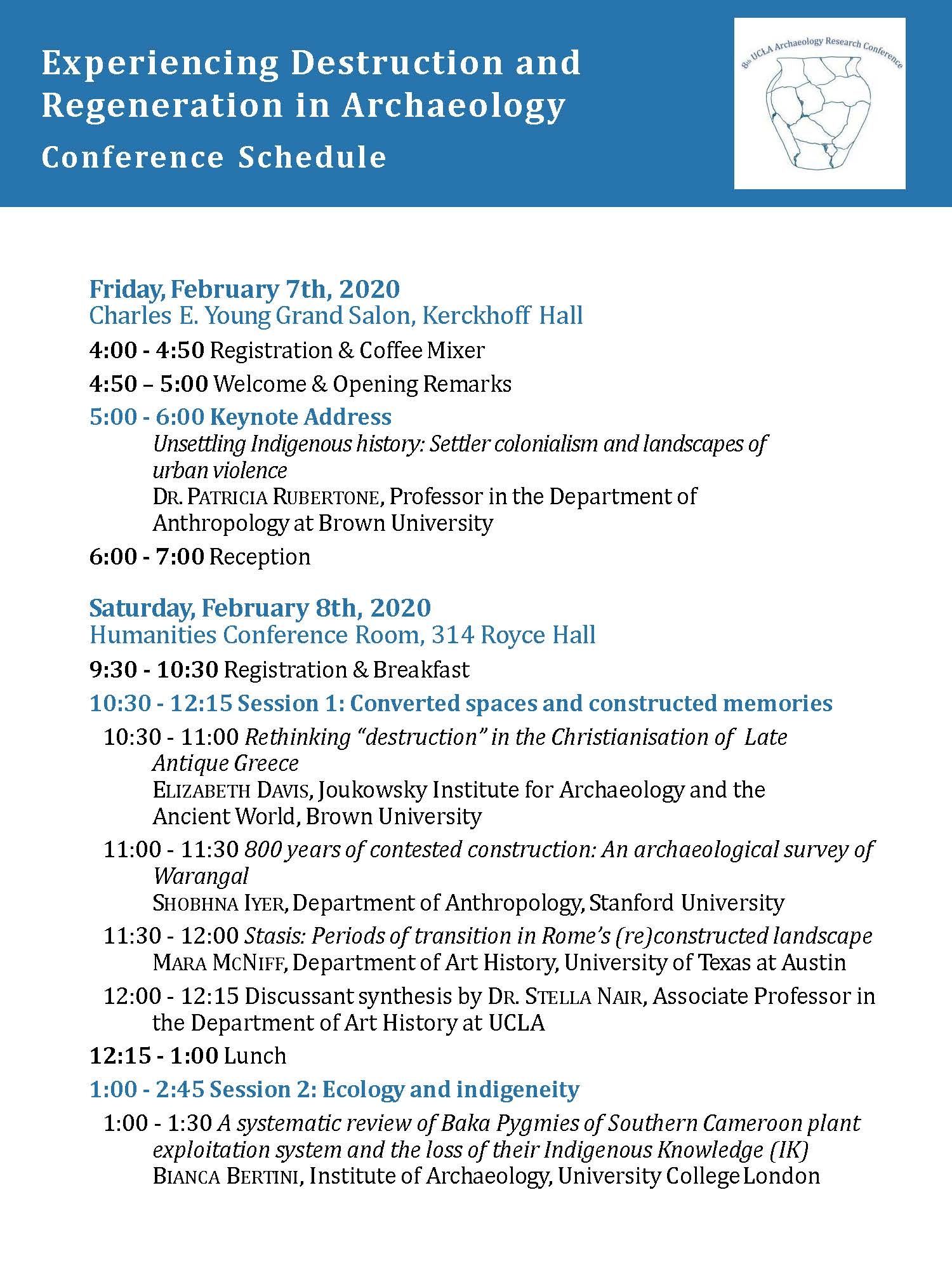
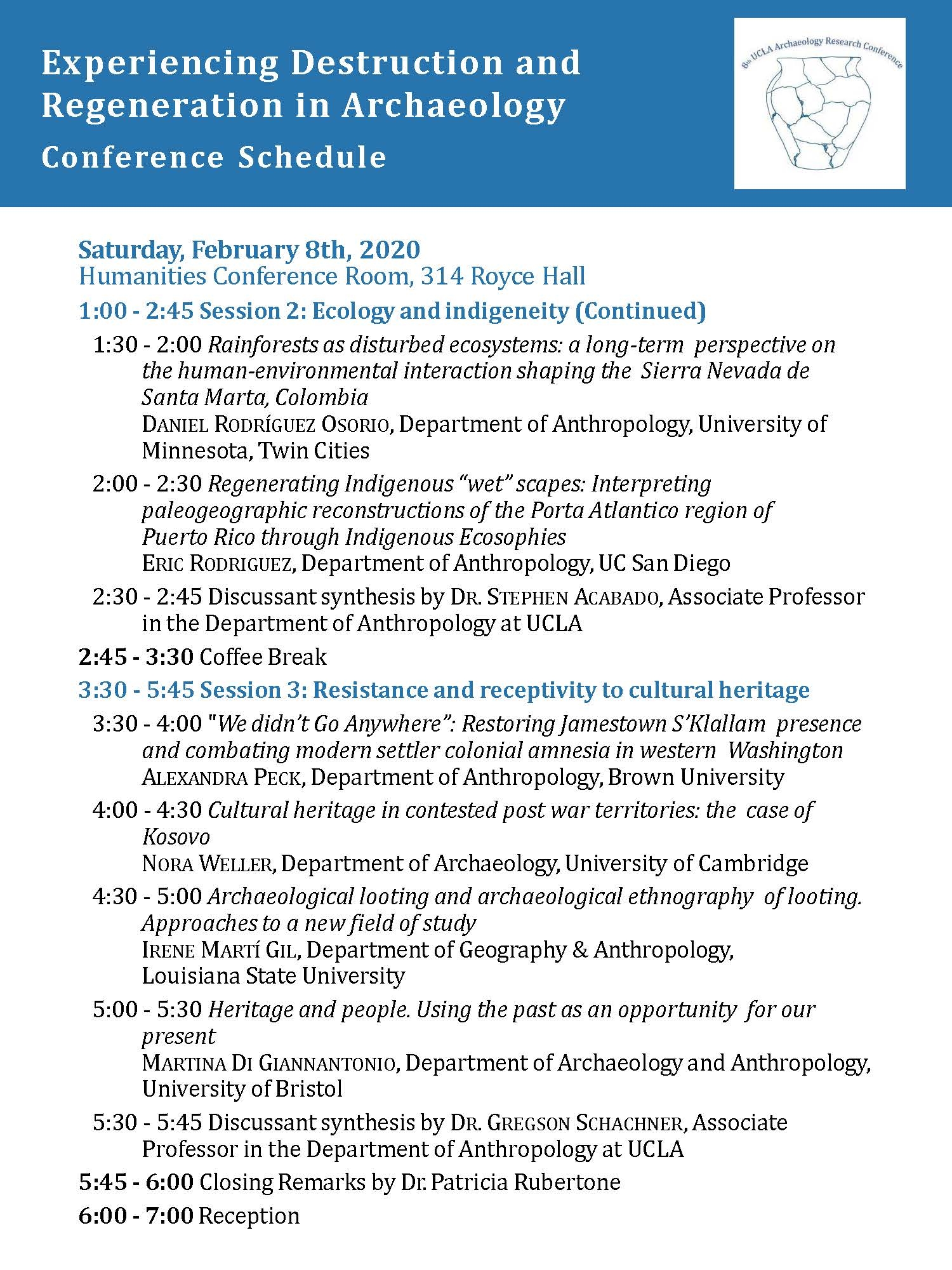
The Graduate Student Association of Archaeology, an affiliate of the Cotsen Institute of Archaeology, will host the 8th Graduate Archaeology Research Conference. This conference will take place on the UCLA campus in Los Angeles, California, on February 7th and 8th, 2020. Accepted applicants will give 20-minute presentations followed by brief question-and-answer sessions.
 Program with Abstracts - 8th Graduate Archaeology Research Conference.pdf
The talks will cover interdisciplinary approaches to this year’s theme on “Experiencing Destruction and Regeneration in Archaeology.” 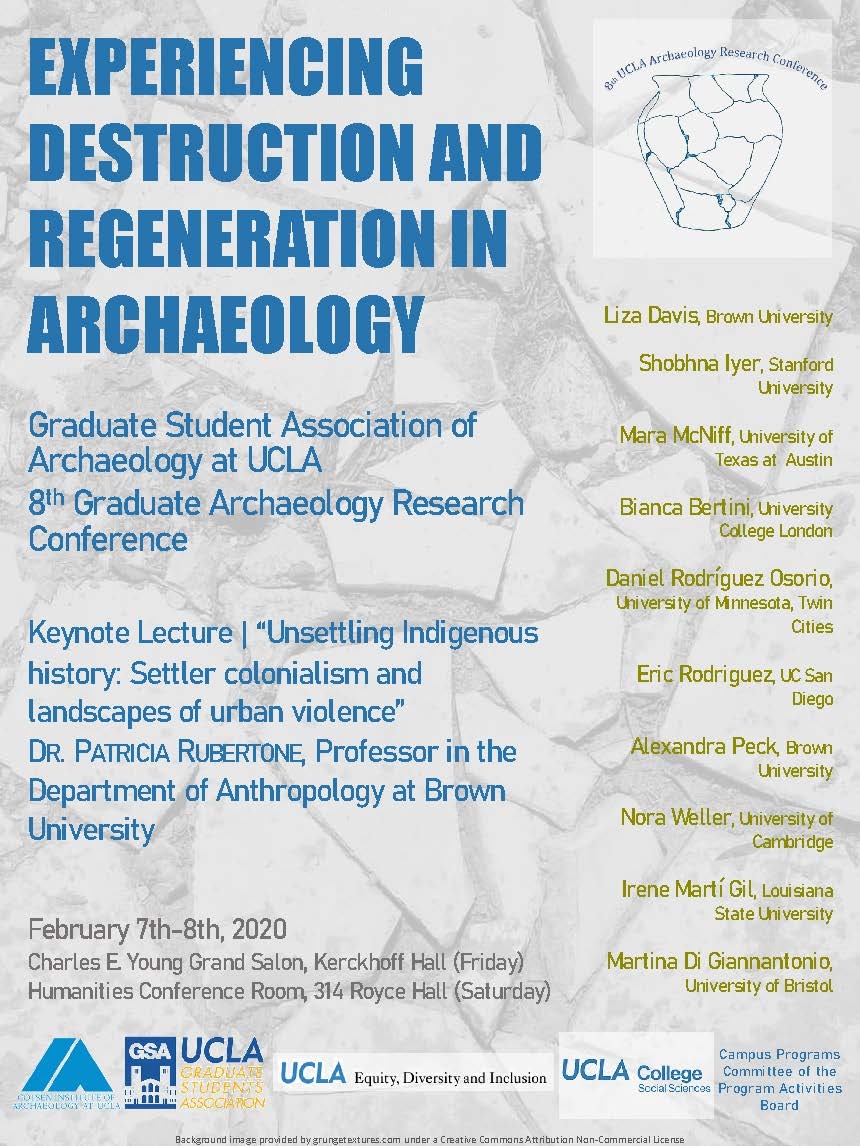 Speakers will discuss the many contexts in which uncontrolled or deliberate destruction—as well as regeneration, reconstruction, and re-use—plays a part in the archaeological past and present. Destruction lies at the heart of archaeological inquiries, seen in every context from the collapse of civilizations to the deliberate breaking of ceramics in ritual settings. Destruction of archaeological remains also occurs in the present through the neglect or eradication of material heritage for economic, sociopolitical or environmental reasons. Simultaneously, reconstruction and regeneration penetrate every aspect of archaeology—seen in current heritage management practices as well as in the material traces of ancient and modern peoples’ efforts at recovery, rebuilding and re-use.
Speakers are encouraged to approach this topic from an experiential perspective, as moments of destruction and reconstruction or regeneration provide communal sensorial experiences, producing and reproducing social memory and shared identities. Archaeology, as a discipline rooted in materiality, can access these senses at their most basic level. Exploring such experiences of destruction and regeneration allows us to better understand the mindsets of past and present peoples alike as they destroyed, rebuilt and remembered.
Keynote speaker Dr. Patricia Rubertone, Professor of Anthropology at Brown University, will address instances of destruction and regeneration through the intersecting lenses of archaeology, history and ethnography. She will discuss commemoration and erasure of Native American monuments in New England in the context of colonialism, as well as the implications of documentary genocide and urban renewal for recovering indigenous pasts.
Please RSVP by February 3rd here.
Email any questions to archaeogradcon@ioa.ucla.edu. The call for papers can be downloaded here.
Contact Conference organizers
Email archaeogradcon@ioa.ucla.edu
Phone
SPEAKER: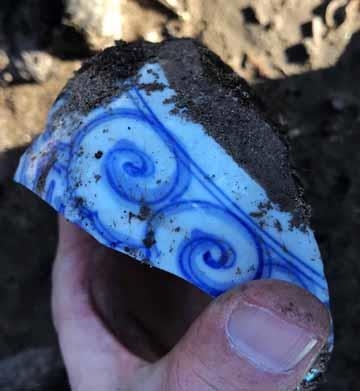
James E. Snead
Professor
Department of Anthropology
Cal State Northridge
ABSTACT:
Historical archaeology in the western United States has traditionally focused on either the colonial-era "missions" or 19th century mining sites in remote locations. Recently, however, historical archaeology itself has undergone a major conceptual shift, emphasizing the ways that the study of material culture can shed light on a wide range of historical topics dating to relatively recent times. These often bear on contemporary social issues, including ethnicity, identity, labor, and heritage. The diverse communities of Los Angeles present a remarkable template for such research: this talk will describe current scholarship at CSUN focusing on specific "lost narratives" of the city's post-1850s inhabitants as examined through archaeology. Particular emphasis will be placed on the dynamics of "community engagement" that are the organizational center of these efforts.
Contact Sumiji Takahashi
Email sutakahashi@ioa.ucla.edu
Phone 310-825-4169
- ‹ previous
- 26 of 52
- next ›