Excavations at Sitagroi Vol. 1: A Prehistoric Village in Northeast Greece Volume 1
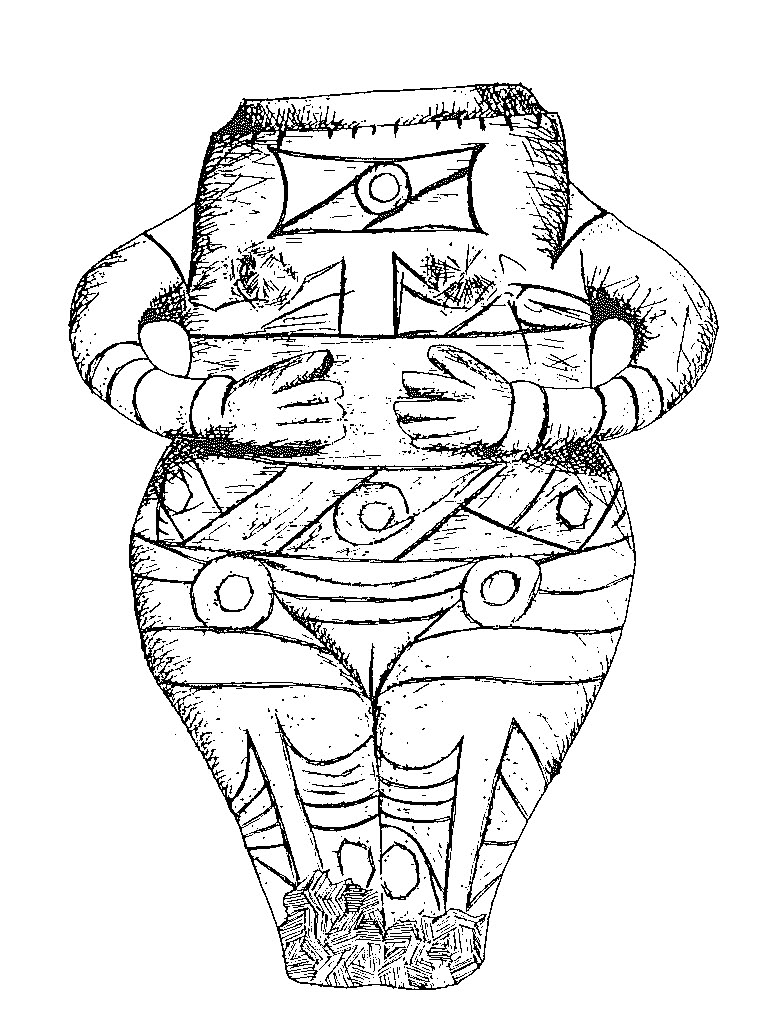
Submitted by admin on March 31, 2015 - 12:00amThe first of 2 volumes reporting on excavations at a middle neolithic to early bronze age site in northeast Greece.



The first of 2 volumes reporting on excavations at a middle neolithic to early bronze age site in northeast Greece.
The volume presents the results on an interdisciplinary regional field project (1984 - 1987) carried out on the island of Crete. This volume traces the changing patterns of settlement and cycles of social complexity from the Late Neolithic period to the pr
This volume publishes the excavation and analysis of the Early Iron Age cemetery at Torone in Chalkidike, in the north Aegean, Greece. Spanning the period between the twelfth or eleventh century down to ca.
There are few places in Europe as remote as the Shala Valley of northern Albania. The inhabitants appear lost in time, cut off from the outside world, a people apart. But this careful interdisciplinary study of their past and way of life tells a very different tale, overturning much of what we thought we knew about Shala and “persistent” peoples everywhere.
The transition to the Formative in the relatively high-altitude study region of Tlaxcala, Mexico is later than it was in choice regions for early agriculture elsewhere in Mesoamerica. From 900 BCE, however, population growth and sociopolitical development were rapid. A central claim in the research presented here is that a macroregional perspective is essential for understanding the local Formative sequence.
This volume discusses general themes that have emerged in interpretation of the results of the 2000–2008 excavations, synthesizing the results of research described in other volumes in the same series. Subsistence analysis and the examination of human remains yielded data on landscape use and mobility, and the storage and sharing of food. The ways in which houses were constructed, lived in, and abandoned leads to a broad discussion of settlement and social organization at Çatalhöyük, and of change over time.
“This two volume report is not only an outstanding benchmark for integrating the wide range of high tech anthropological tools now available to the excavator, it also strongly affirms the important role that ancient texts, such as the Hebrew Bible, fulfill when interpreting artifacts and data from an Levantine site.”
— Jeffrey P. Hudon, Near East Archaeological Society Bulletin, 2015
“The largely American team have worked closely with Albanians (both senior scholars and students), demonstrated great sensitivity to local history, politics and culture, and they have expended considerable time and effort on the conservation of finds, the analysis of local environment and survey, a summary in Albanian, and heritage management issues.”
— James Whitley, Antiquity, 2016
“… Schwartz provides a masterful updated overview of the points of comparison and contrast amongst the Khabur rescue sites. This new publication provides a stimulating research framework, and adds a huge amount of detail. Schwartz and his team are to be congratulated on shifting the focus of early complexity studies through their systematic work at this small village located in a region of Syria.”
— Roger Matthews, Antiquity, 2016